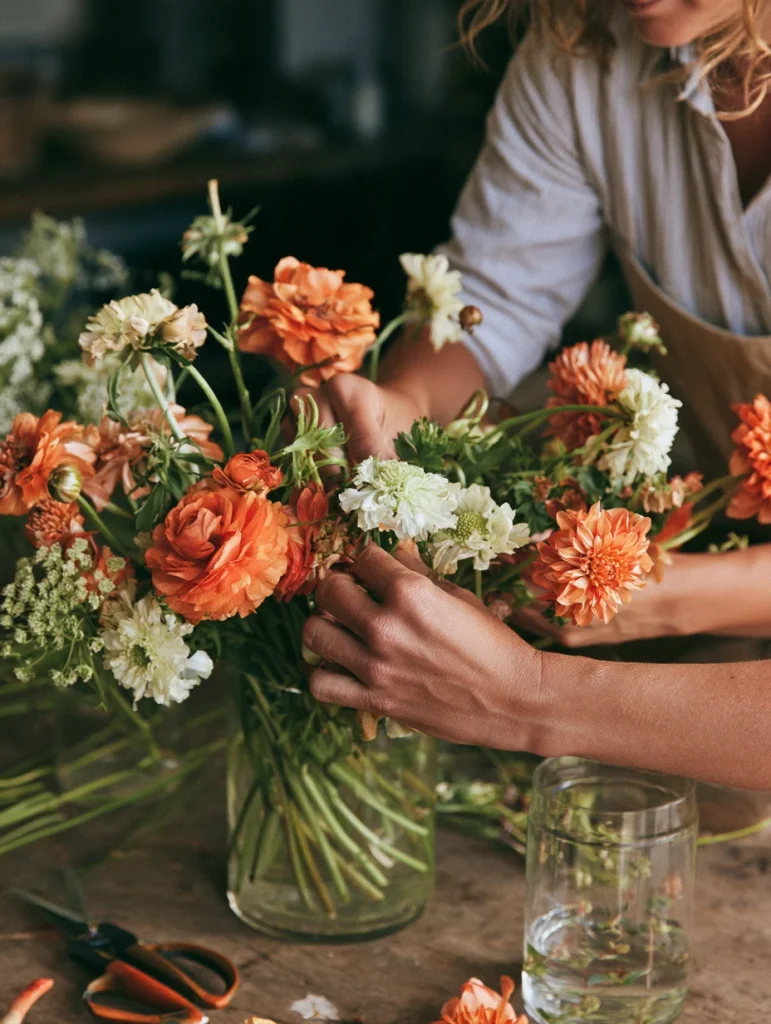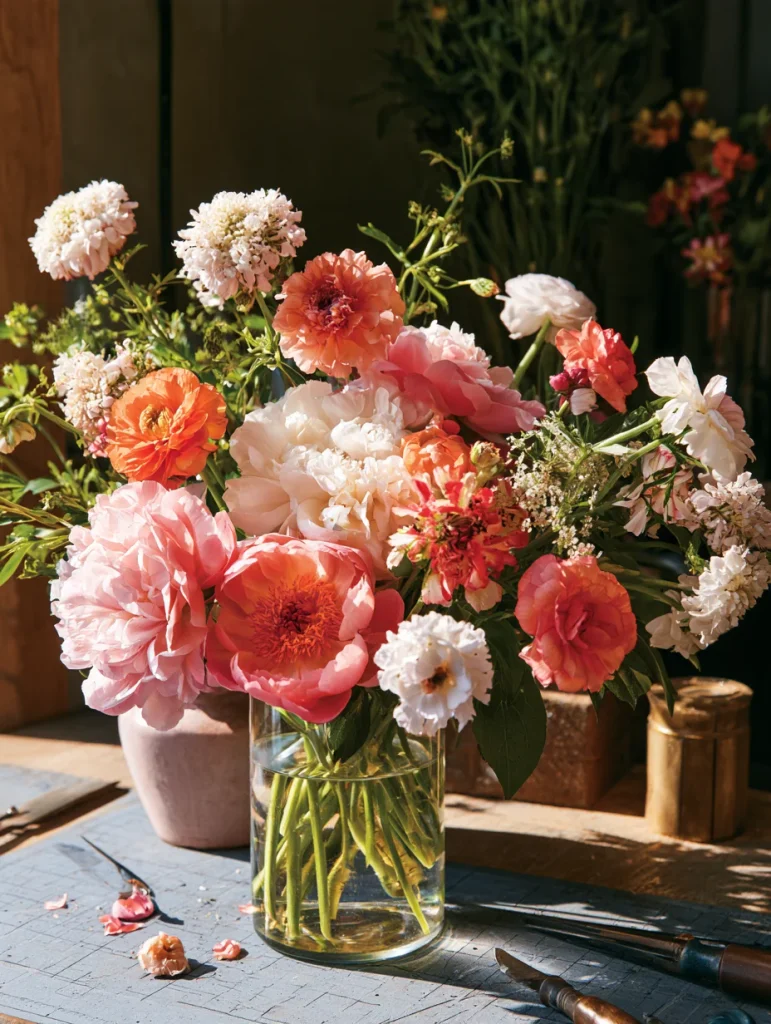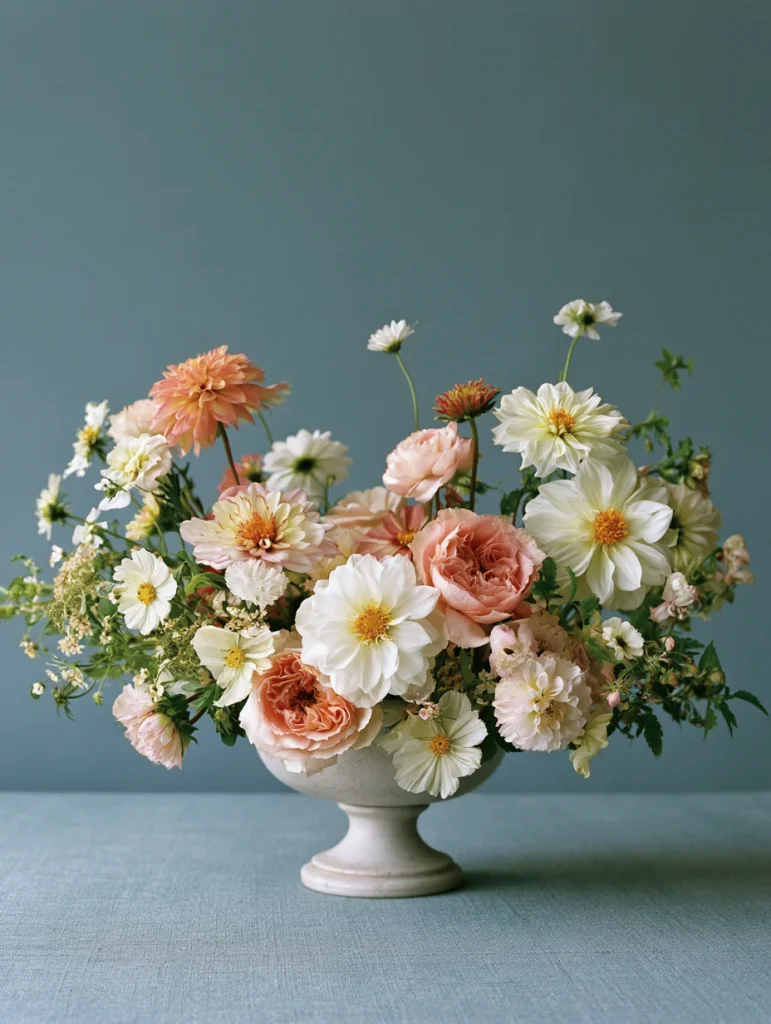
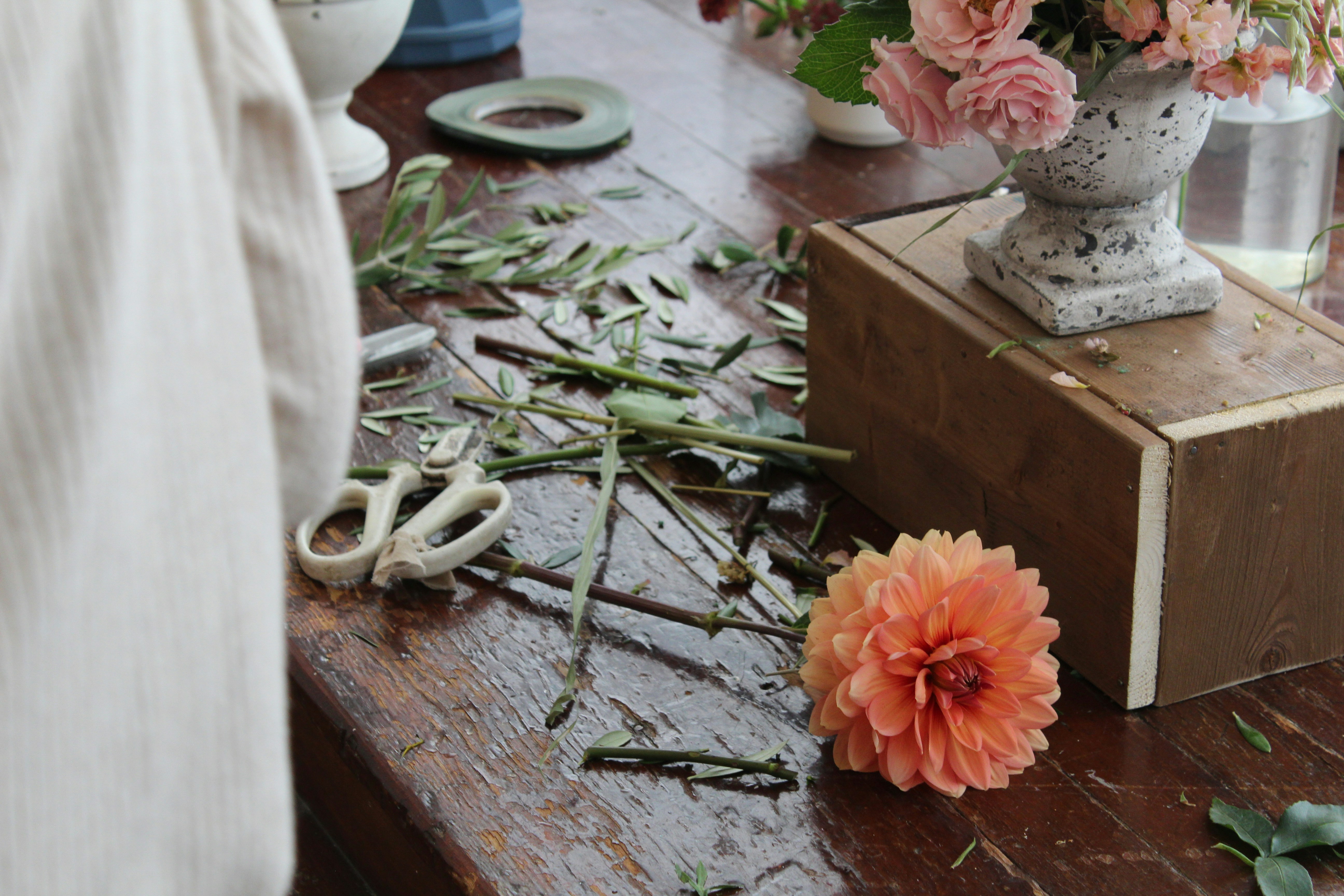
Successful flower arranging begins with dependable supplies and a clear plan. By understanding your tools, selecting the right blooms, and mastering a few core design principles, you can create stunning, long-lasting floral displays.
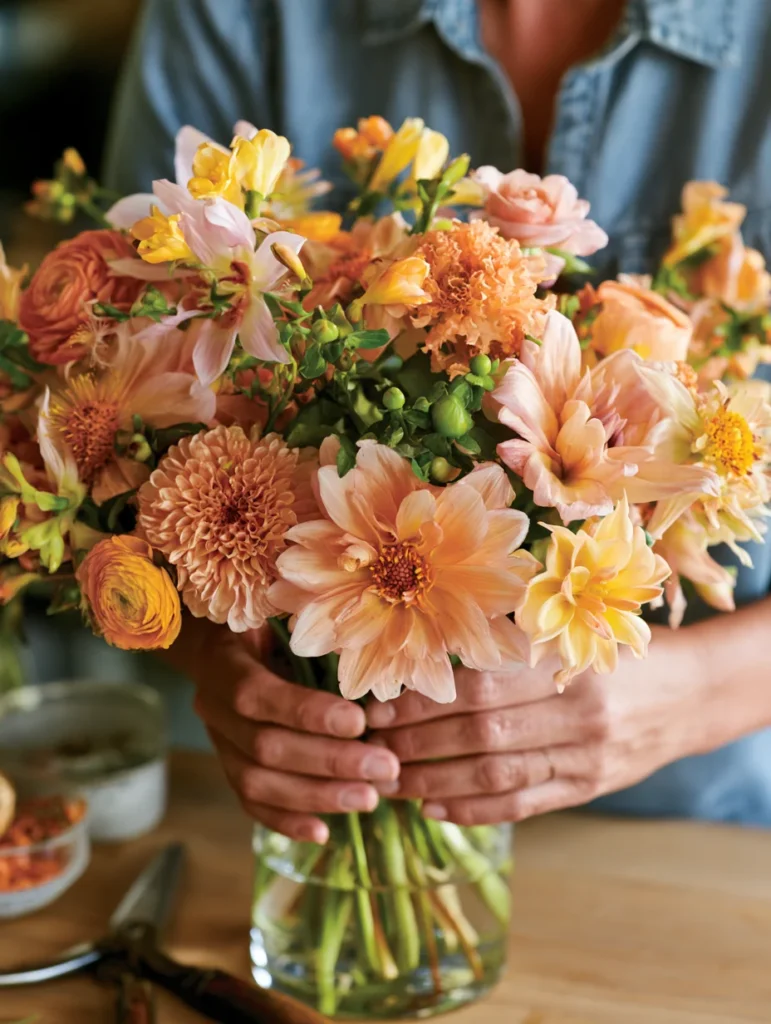
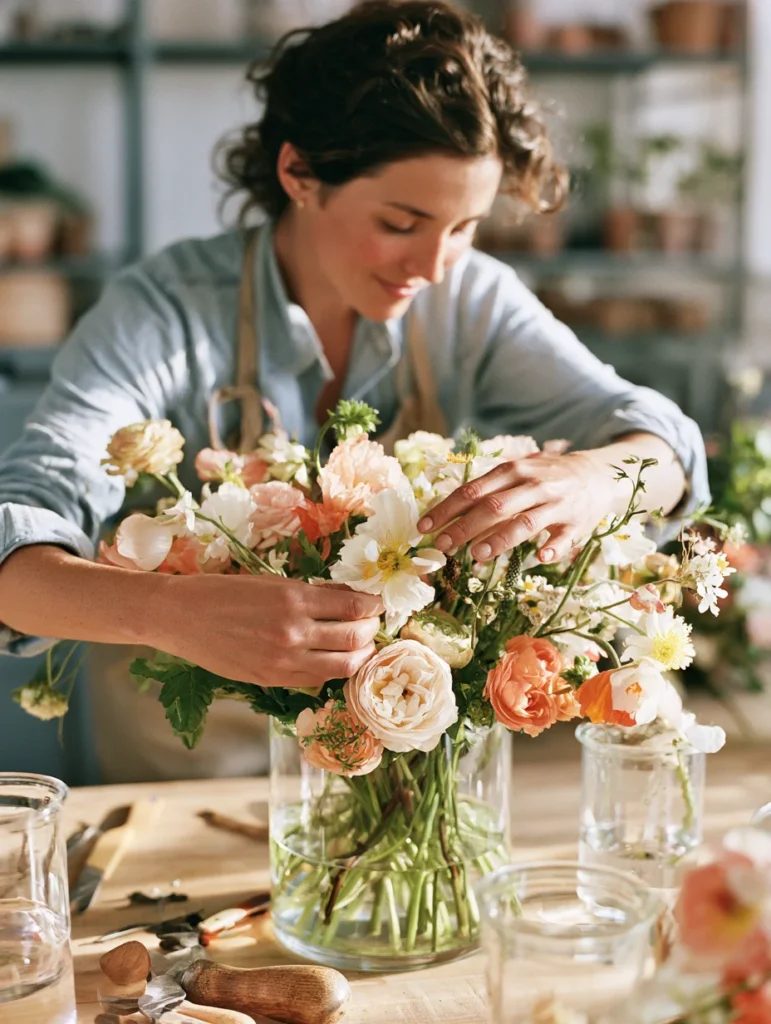
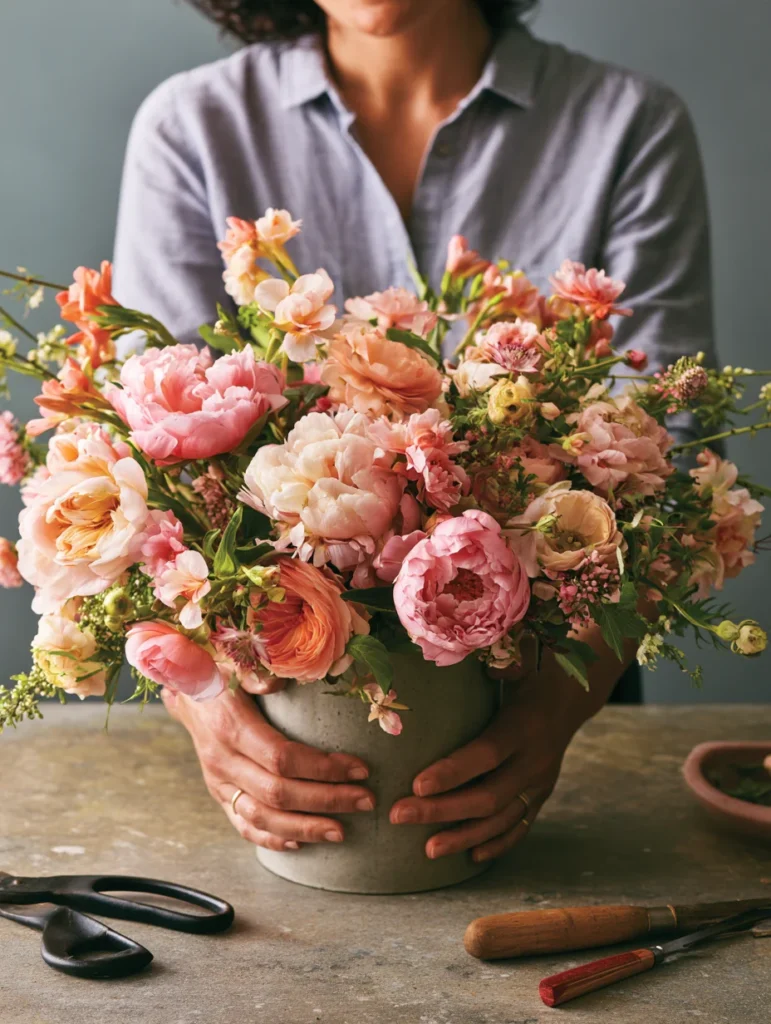
1. Essential Tools and Mechanics
Having the right equipment makes the process smoother and extends the life of your flowers. Match each item to the flower type and arrangement style rather than collecting equipment indiscriminately.
Cutting Tools
- Floral Shears: Best for most standard flowers.
- Florist’s Knife: Ideal for woody stems or when a highly precise cut is needed.
- Care Tip: Keep cutting tools clean, disinfect them between projects, and sharpen or replace them when they begin dragging. Dull blades crush vascular tissue, shorten vase life, and invite bacteria.
Support Materials
- Floral Tape & Waterproof Tape: Used to bind stems or fasten grids and mechanics to a container.
- Floral Wire: Reinforces delicate flowers, creates curves, or secures foliage.
- Floral Foam: Provides a structured base for precise placement. Always fully saturate it according to the manufacturer’s directions.
- Chicken Wire: A reusable, eco-friendly alternative for loosely gathered, garden-style arrangements. It can be easily shaped inside a vase or bowl.
Containers and Hydration
- Vases: Tall, narrow vessels suit upright stems; low bowls encourage broad, compact compositions.
- Water & Flower Food: Keep clean water in every container and add flower food to supply nutrients and discourage microbial growth.
- Decorative Stones: Useful for concealing mechanics, anchoring stems, or adding weight.
Helpful Extras
- Spray Bottle: Refreshes delicate foliage and petals.
- Thorn Stripper: Prepares roses and other prickly stems efficiently.
- Waterproof Work Surface: Protects tables from moisture, sap, and stains while leaving room to organize tools.
2. Selecting the Perfect Blooms
Understanding Flower Roles
A balanced arrangement relies on a hierarchy of botanical elements:
- Focal Flowers: (e.g., roses, peonies, dahlias, lilies) Attract attention through size, color, or distinctive form.
- Secondary Blooms: Support the visual anchors without competing with them.
- Filler Flowers: (e.g., waxflower, baby’s breath, small asters) Soften open spaces and add delicacy.
- Foliage: Provides the framework. Broad leaves create volume, slender grasses introduce movement, and branching stems guide the eye.
Mastering Color and Texture
- Monochromatic: Uses several tones of one color for a calm, refined effect.
- Analogous: Colors sitting beside one another on the color wheel create gentle harmony.
- Complementary: Opposite colors on the wheel provide stronger contrast and energy.
- Seasonal: Soft pastels in spring; warm rust, gold, and burgundy in autumn.
- Texture Tip: Pair rounded blooms with spikes, airy sprays, glossy leaves, or feathery foliage. However, leave enough visual space for each element to remain recognizable.
Considering the Setting
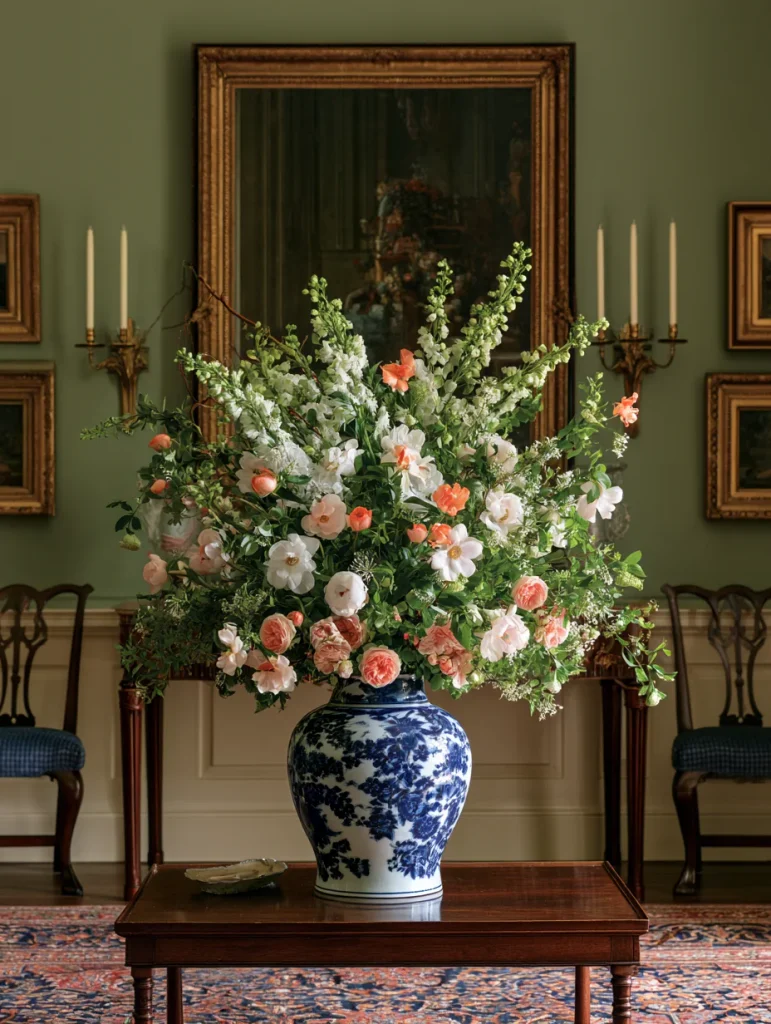
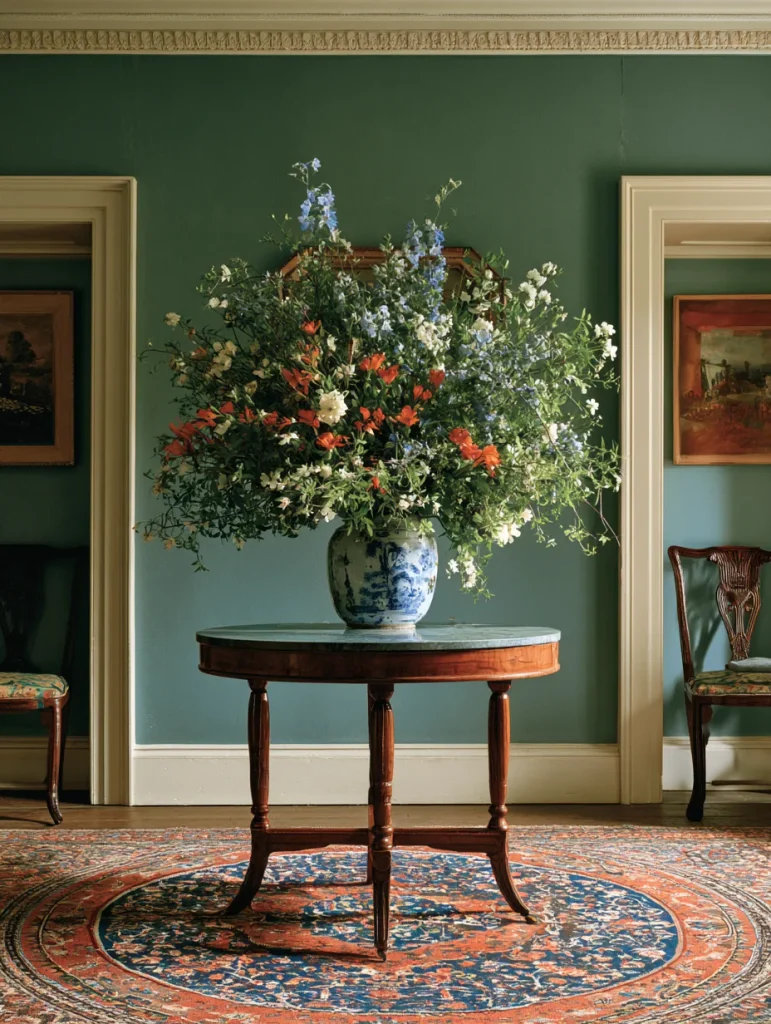
Match the palette to the room’s decor, taking account of wall colors, textiles, and artwork. A formal celebration may suit elegant, restrained blooms, whereas a casual gathering can accommodate looser shapes and playful color. Seasonal availability often improves freshness and affordability.
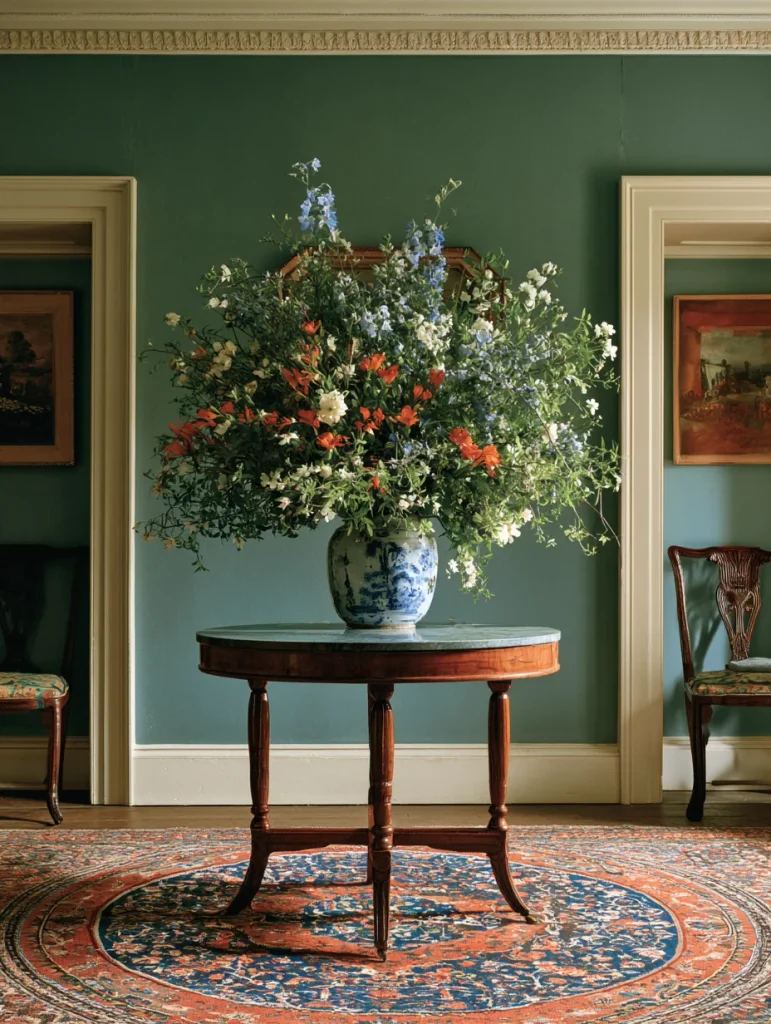
3. Preparation and Stem Care
Proper preparation gives an arrangement a longer life and a more polished appearance.
The Basics
- Strip: Remove foliage that would sit below the waterline, along with bruised leaves and damaged petals.
- Cut: Recut every stem with clean, sharp shears at an angle to increase the surface area for water uptake. Perform this step under water when possible, or place each stem into fresh water immediately after cutting.
- Hydrate: Allow flowers to hydrate for several hours in a cool location away from direct sun and drafts before designing.
Specialized Stem Treatments
- Woody Stems: Split or lightly scrape the base so they can absorb water more effectively.
- Hollow Stems: Cut cleanly and support them with a slender twig or floral wire if they bend.
- Delicate Stems: Handle carefully using a sharp blade rather than crushing them with blunt scissors.
- Heavy Heads: Flowers with heavy blooms may require floral tape, discreet wire, or nearby foliage for support.
4. Building the Arrangement
Step-by-Step Construction
- Prepare the Vase: Choose a clean container, fill it with fresh water and flower food.
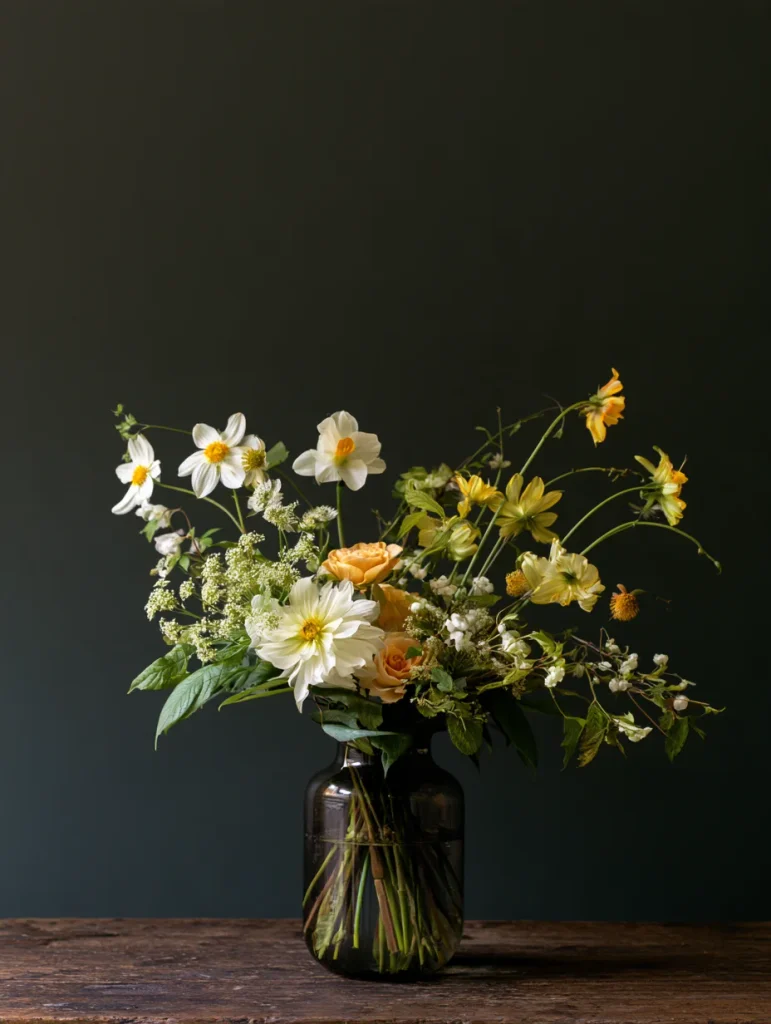
- Establish the Framework: Add greenery first to create a loose structure and define the intended height and width.
- Place Focal Flowers: Position them at varied heights and angles.
- Add Secondary and Filler Blooms: Follow with delicate accents, leaving purposeful spaces between elements.
Core Design Principles
- The Rule of Thirds: Use this to guide height and placement.
- Asymmetry & Negative Space: Prevent a mechanical appearance. An uneven but intentional distribution looks more natural than evenly spaced flowers.
- Visual Rhythm: Vary stem lengths to create movement.
- Visual Weight: To avoid a top-heavy result, place visual weight lower and wider, using sturdy greenery or shorter blooms to anchor the composition.
The Final Assessment
Once the main flowers are in place, pause to assess the arrangement from every angle.
- Rotate the container frequently while working so the design remains attractive from all sides.
- Gently test for stability; adjust stems or add support if it leans.
- Ensure each flower remains visible and contributes to the overall shape instead of hiding behind another bloom.
5. Placement and Long-Term Care
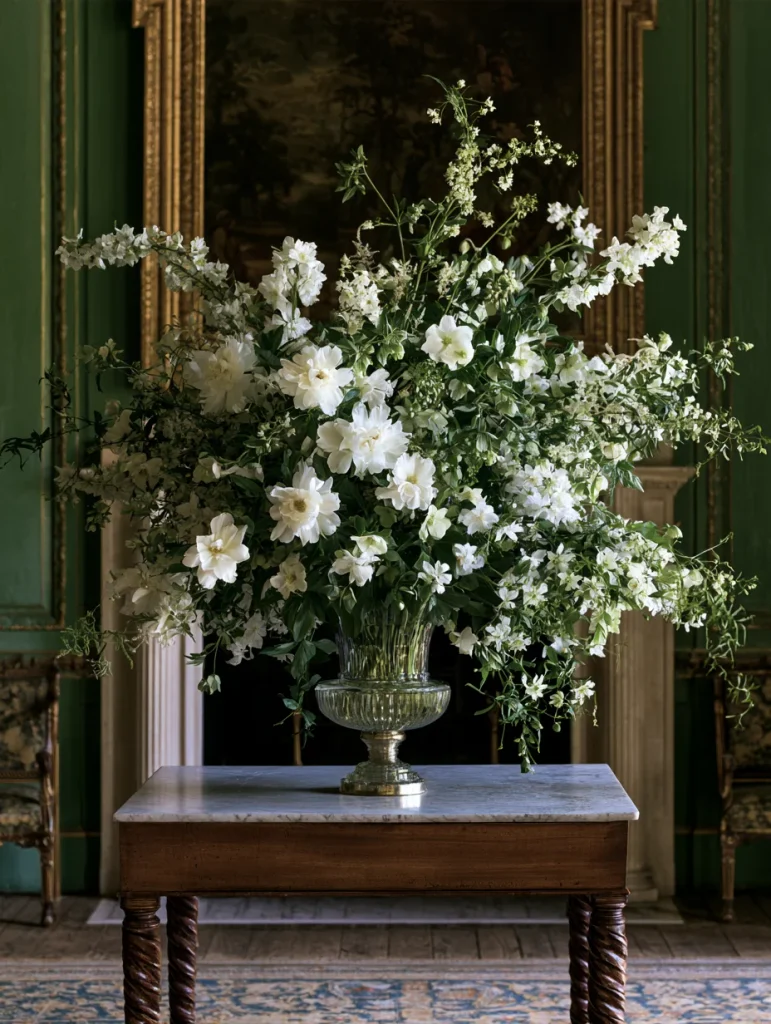
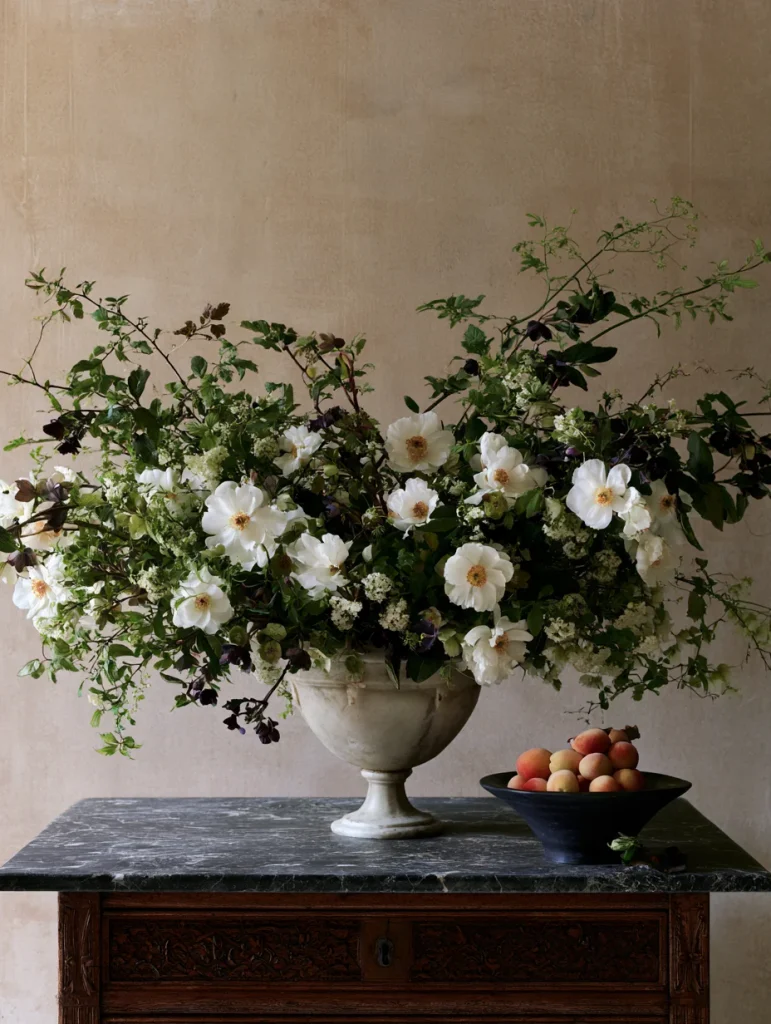
Strategic Placement
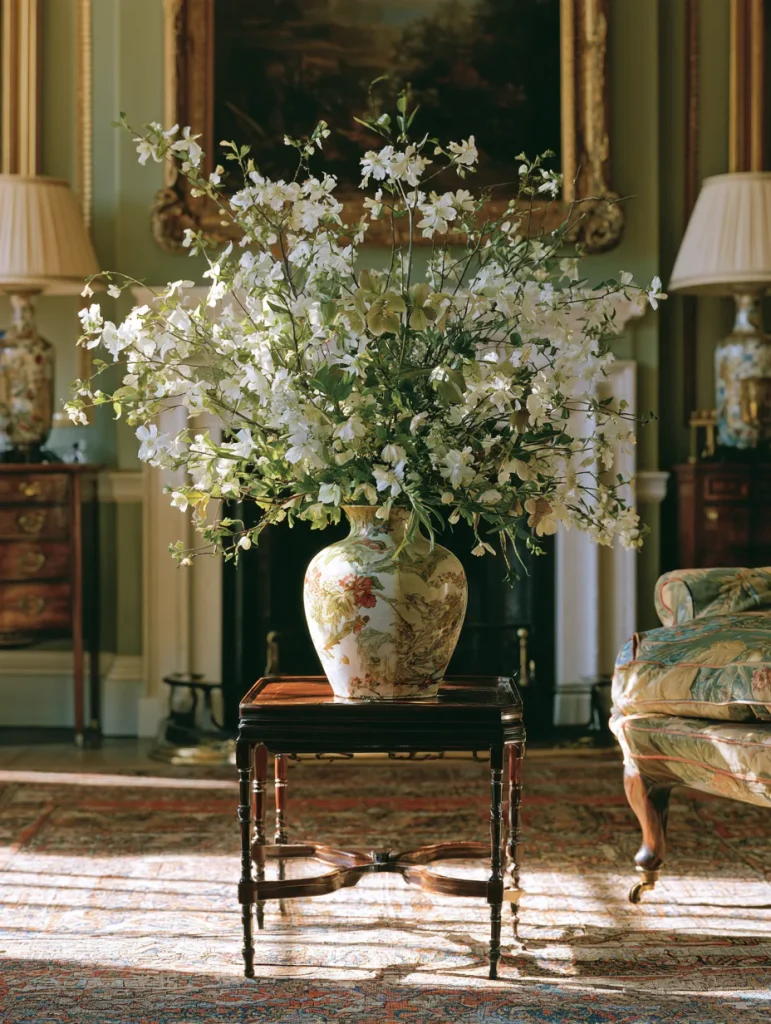
Scale should suit both the container and its surroundings. A large arrangement can overwhelm a small table, while a delicate design may look lost in a spacious room.
- Dining Tables: Keep the central portion low enough to preserve clear sightlines between guests.
- Environment: Place flowers where they receive suitable indirect light. Keep them away from direct sun, cold drafts, heating vents, and air-conditioning outlets.
- Hazards: Keep arrangements away from ripening fruit (which releases ethylene gas) and beyond the reach of curious pets if the plants are toxic.
Ongoing Maintenance
- Change the water regularly and wash the container thoroughly before refilling it.
- Trim a small amount from the stems every few days at an angle with a clean tool.
- Remove fading blooms and damaged leaves promptly.
- Replenish the recommended amount of flower food with every water change.
Common Mistakes to Avoid
- Using a dirty vase (invites bacteria).
- Cutting every stem to the exact same length (creates a flat, unnatural look).
- Combining too many competing colors or compressing flowers until the arrangement loses definition.
- Neglecting foliage (leaves the design sparse) or adding too much (conceals the flowers).
- Note: Different varieties have different vase lives. Remove short-lived blooms as they fade rather than allowing them to affect longer-lasting stems.
Experiment with shape, color, and texture, and photograph your completed designs to compare them over time. Careful observation and regular practice will help you refine your balance, proportion, and flower selection with confidence.