
Floral design offers a wide spectrum of creative expression. By understanding different historical and stylistic approaches, you can elevate your arrangements from simple bouquets to intentional, sculptural compositions. Below are four distinct methodologies to guide your design process.
1. Ikebana: The Art of Line and Space
Ikebana treats flowers, branches, and foliage as individual lines rather than material for a densely packed bouquet. A kenzan, or pin frog, makes this precision possible. Its weighted base contains closely spaced upright pins that grip trimmed stems, allowing each element to be positioned at a deliberate angle. The result is an arrangement shaped by asymmetry, negative space, balance, and seasonality, with the natural character of every branch remaining visible.
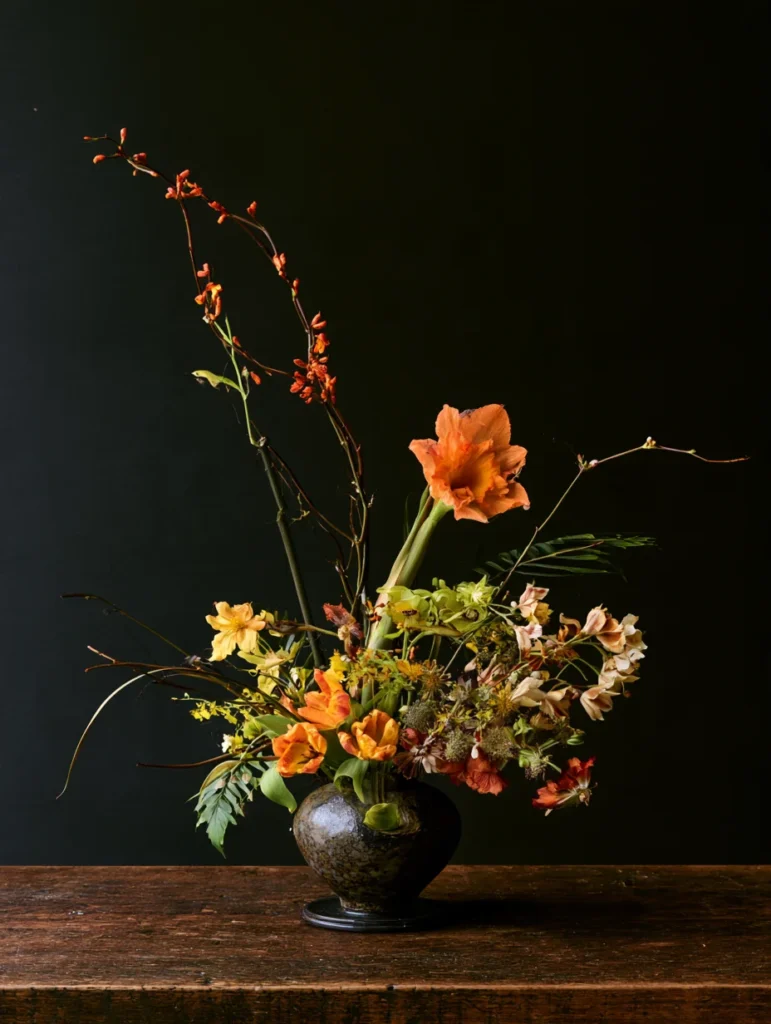
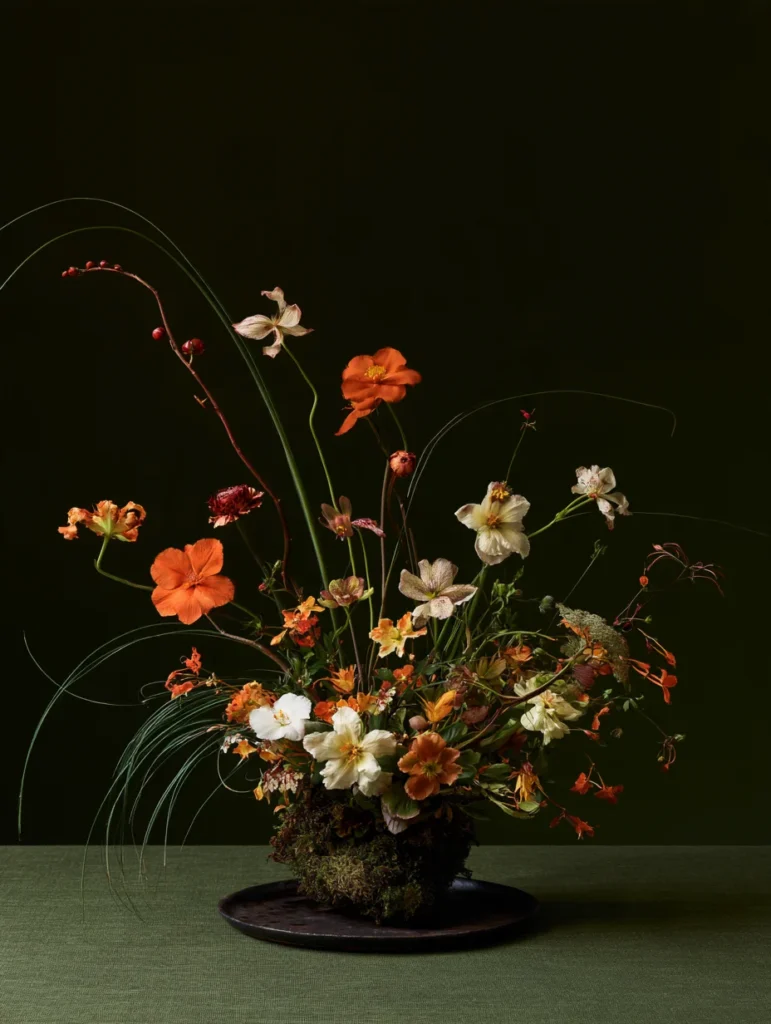
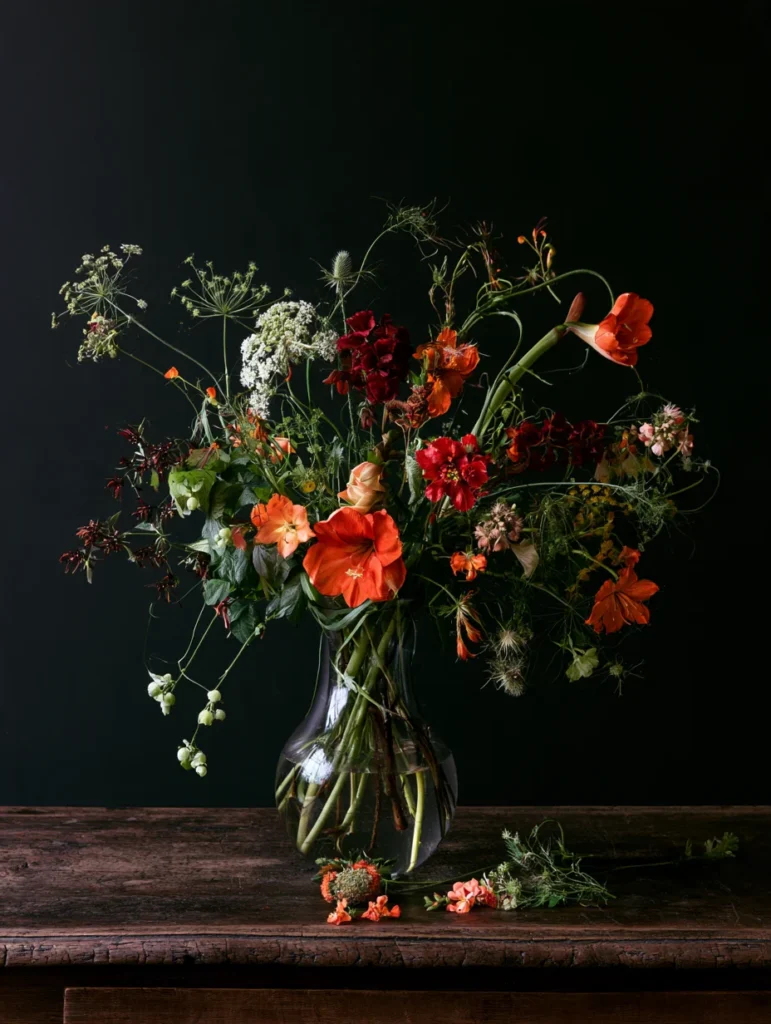
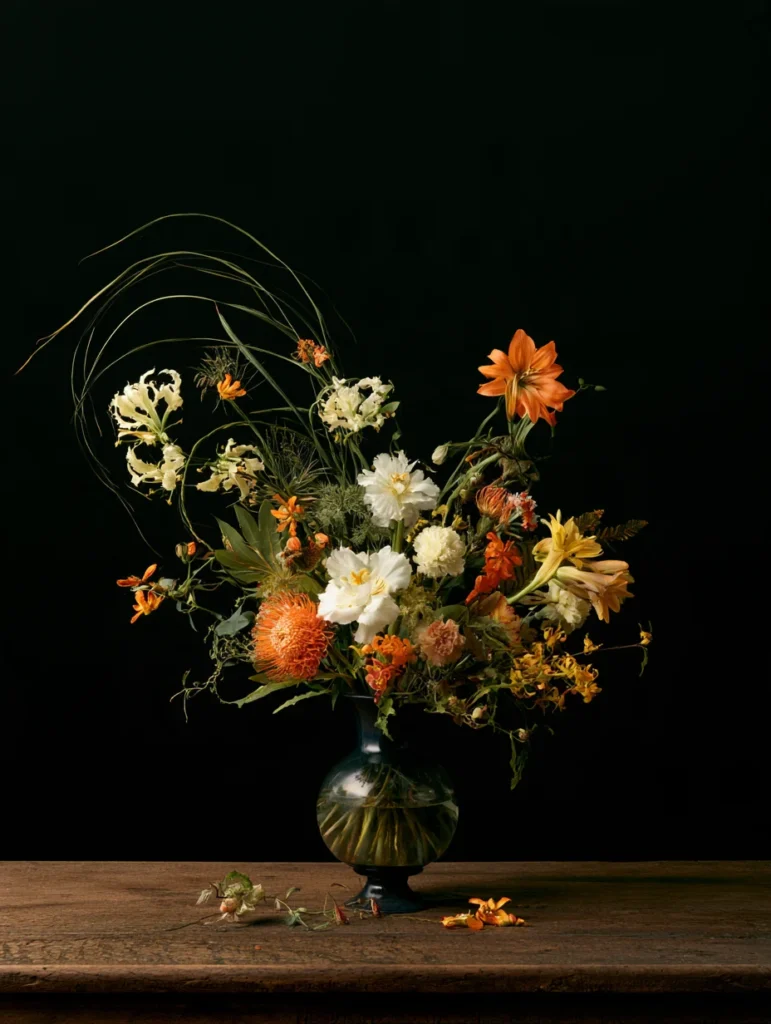
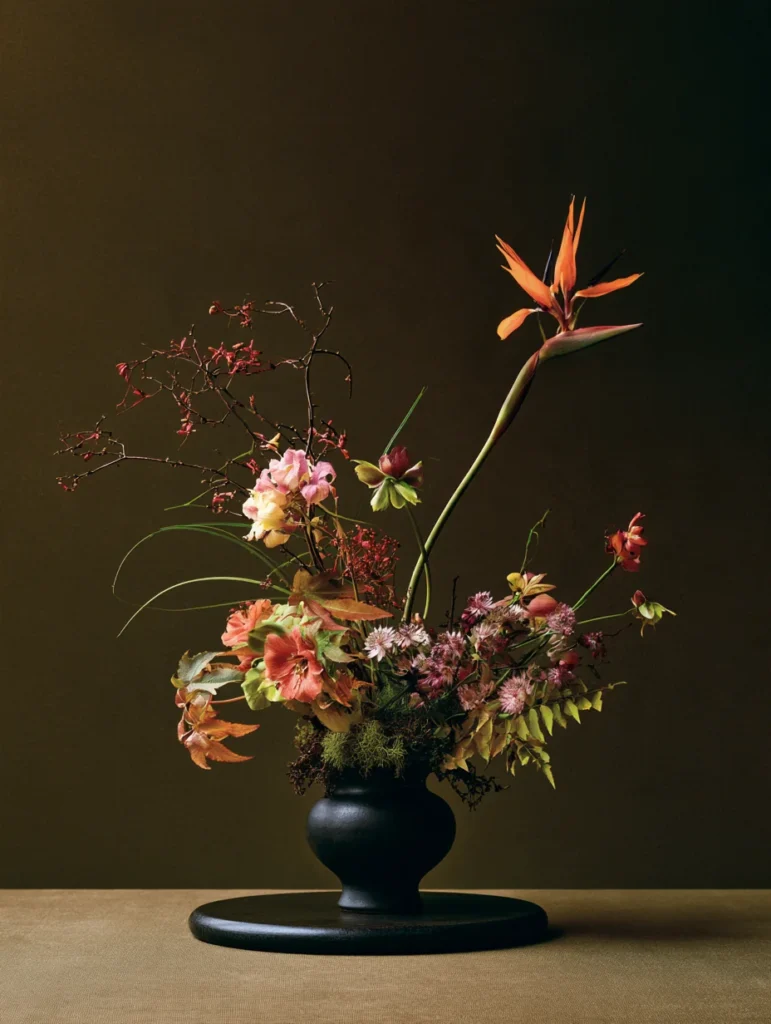
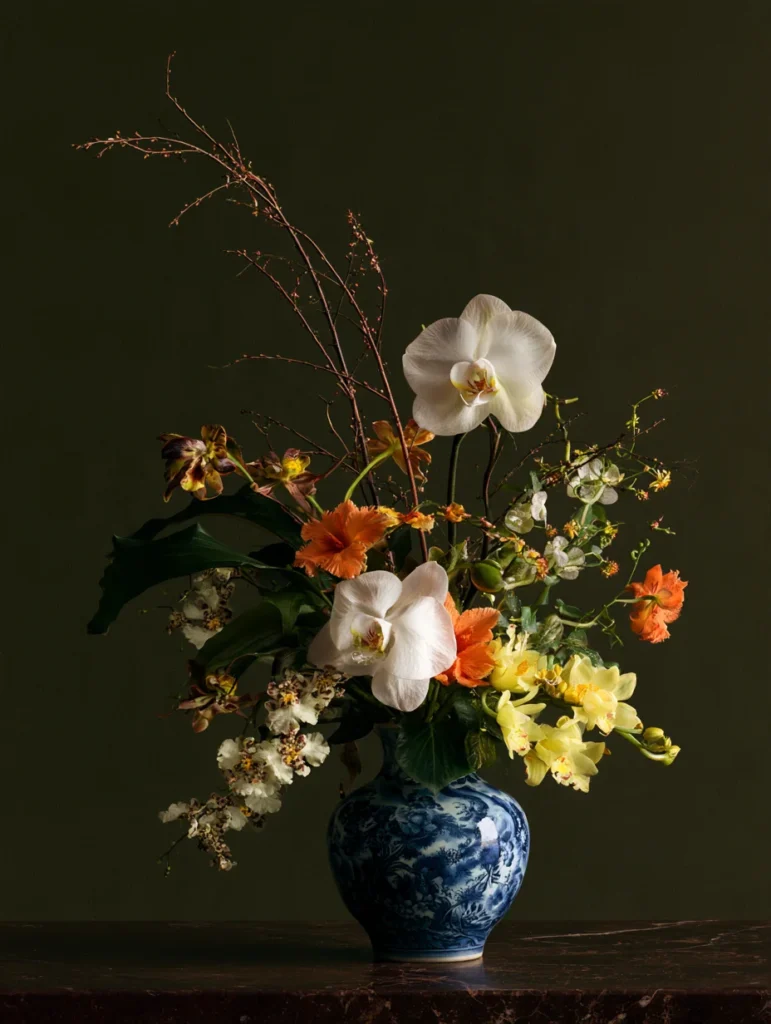
- Vessel and Tool Selection: Begin with a vessel whose proportions and material complement the plant material. A low, wide container suits spreading branches, while a taller vase supports upright stems. Choose a kenzan that fits securely inside, leaving enough room for water. Secure it with waterproof floral adhesive and test its stability before adding plant material.
- Preparation and Assembly: Prepare each stem by removing damaged leaves and cutting its base at an angle. Woody branches may need splitting, shaving, or gentle bending to enter the pins securely. Establish the primary line first (often the tallest or most expressive branch), then add a shorter secondary line that creates contrast.
- Maintenance and Balance: Use enough water to cover the lower stem ends without submerging foliage, and replenish it regularly. Common errors include overcrowding, equal stem lengths, excessive symmetry, and forcing every element into a rigid upright position. Step back frequently to assess balance from several viewpoints.
2. Dutch and Flemish Still Life: Atmosphere and Abundance
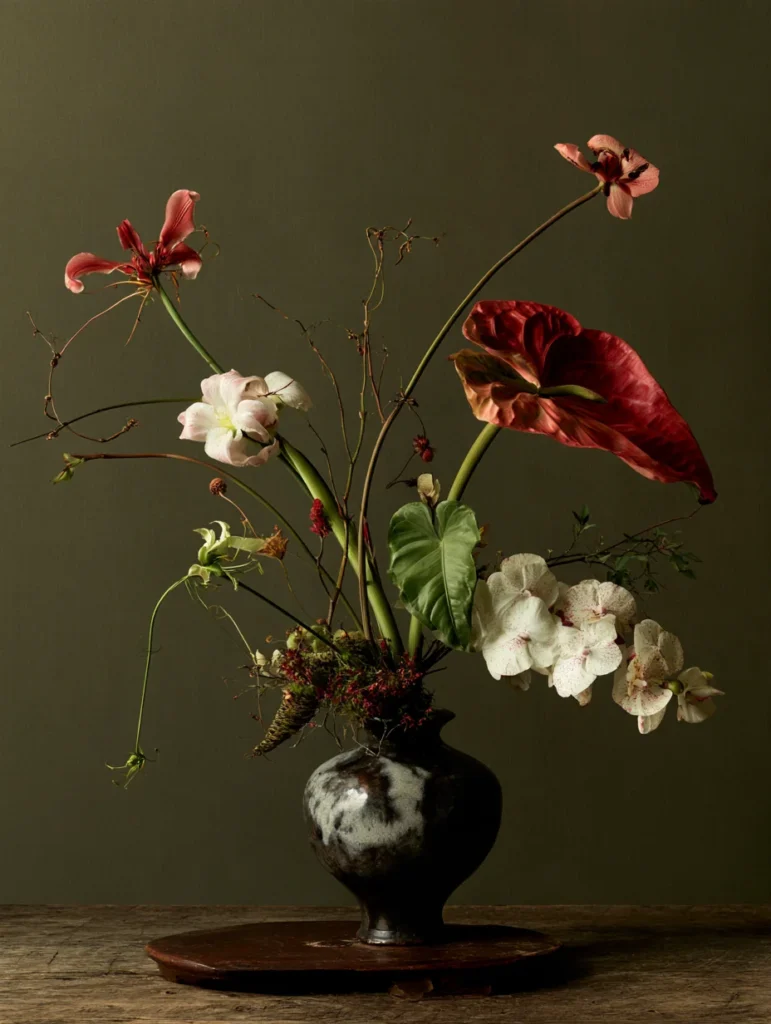
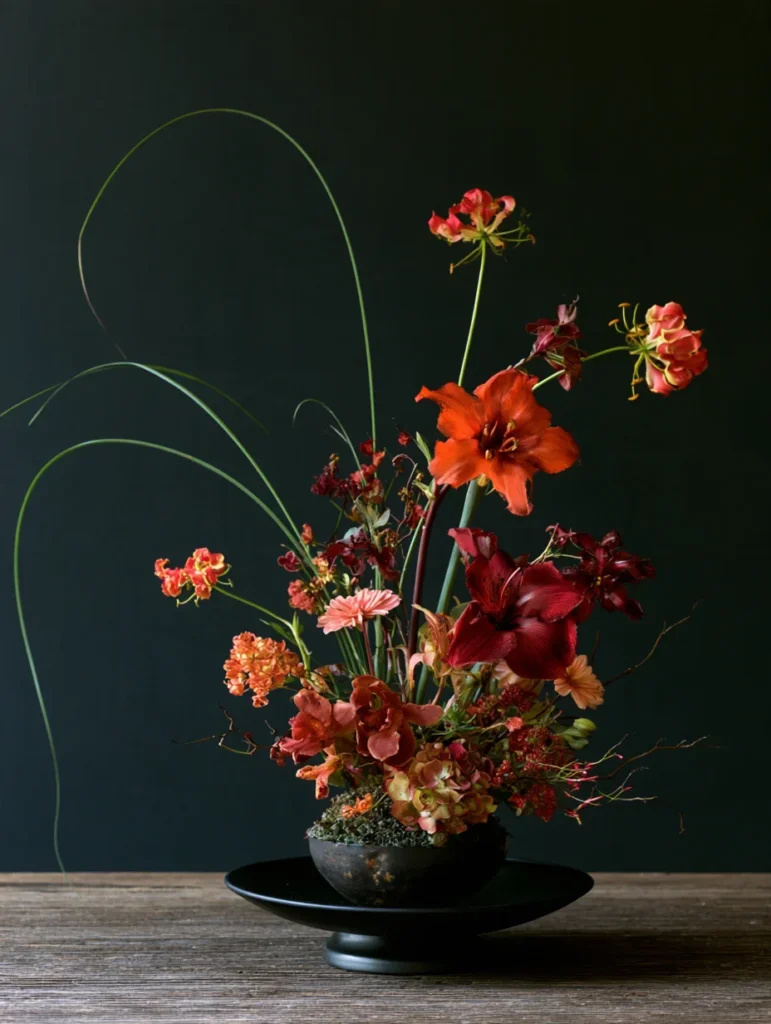
Dutch and Flemish flower still lifes offer more than a historical image to reproduce; they provide a visual language for building atmosphere. Their compositions gather an abundant botanical variety into a single, apparently impossible bouquet, where open flowers, tight buds, fading petals, fruit, and luxurious objects coexist. Dark backgrounds intensify the drama, while directional light reveals the velvety, waxy, brittle, or translucent surfaces of each element.
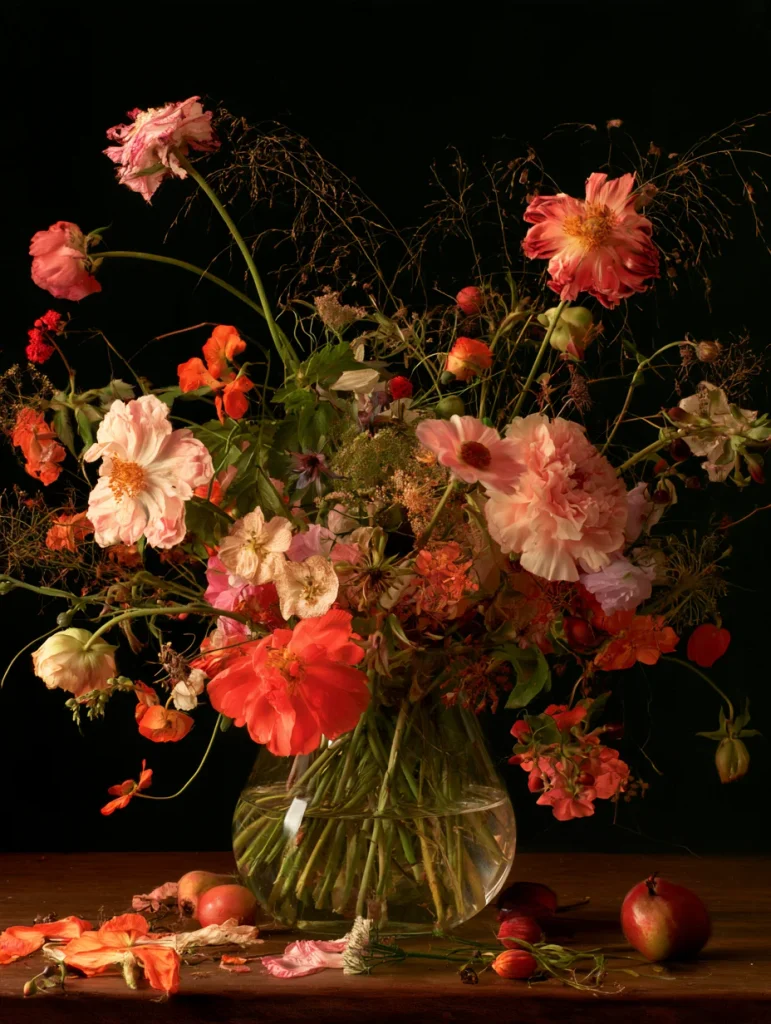
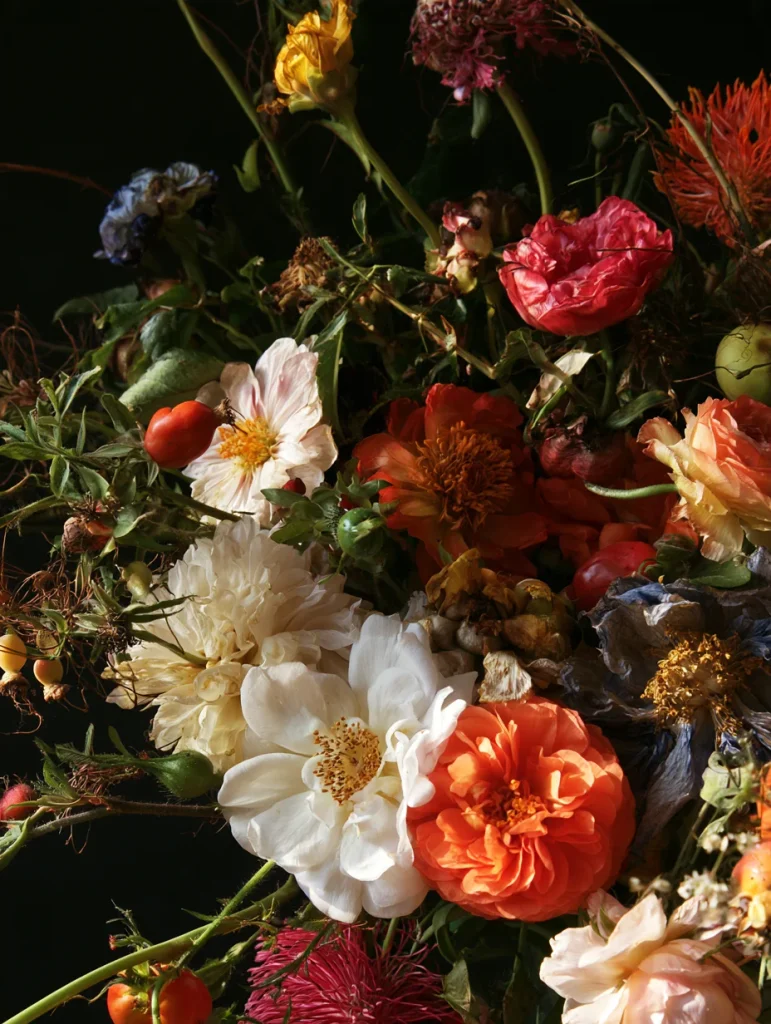
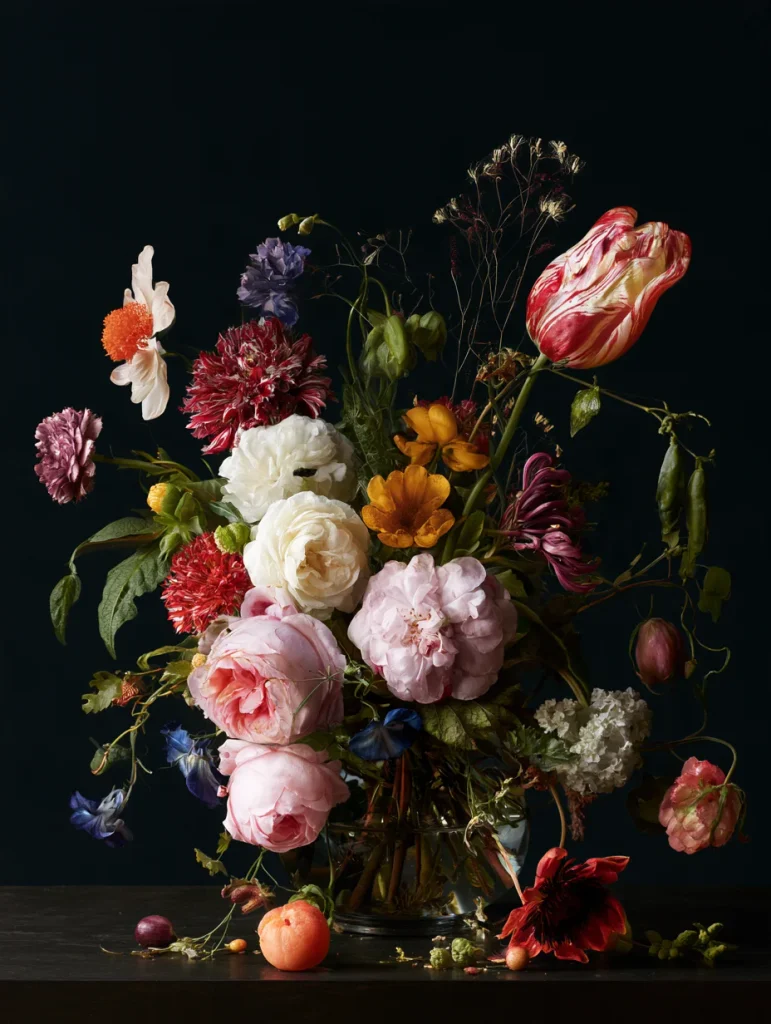
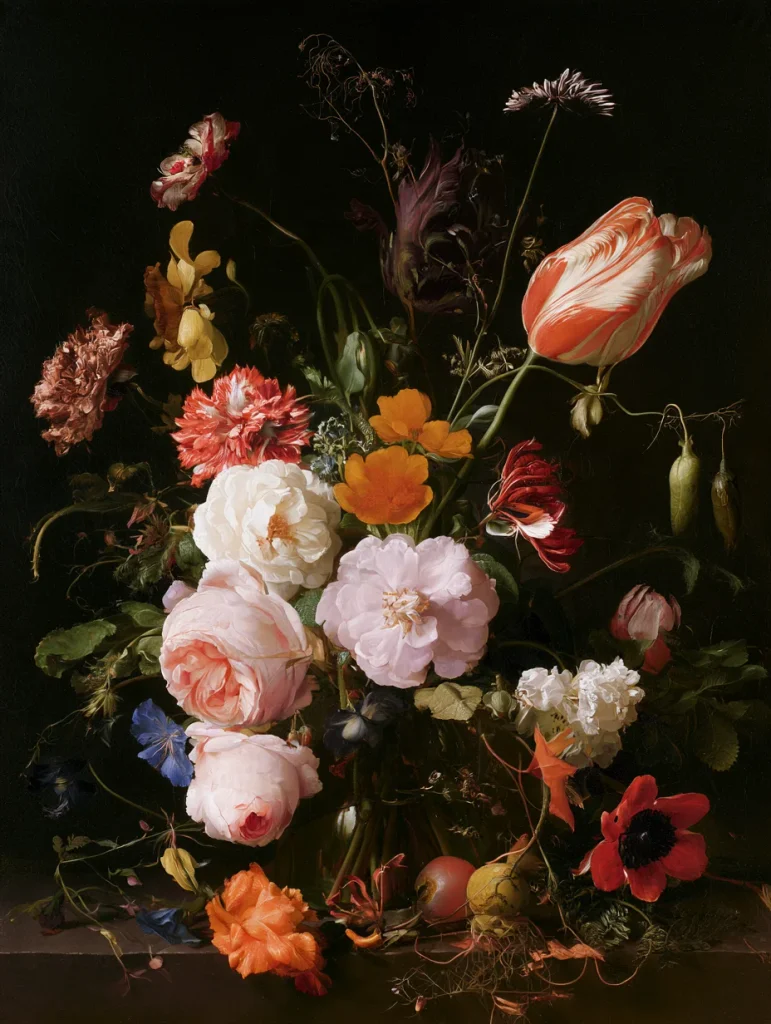
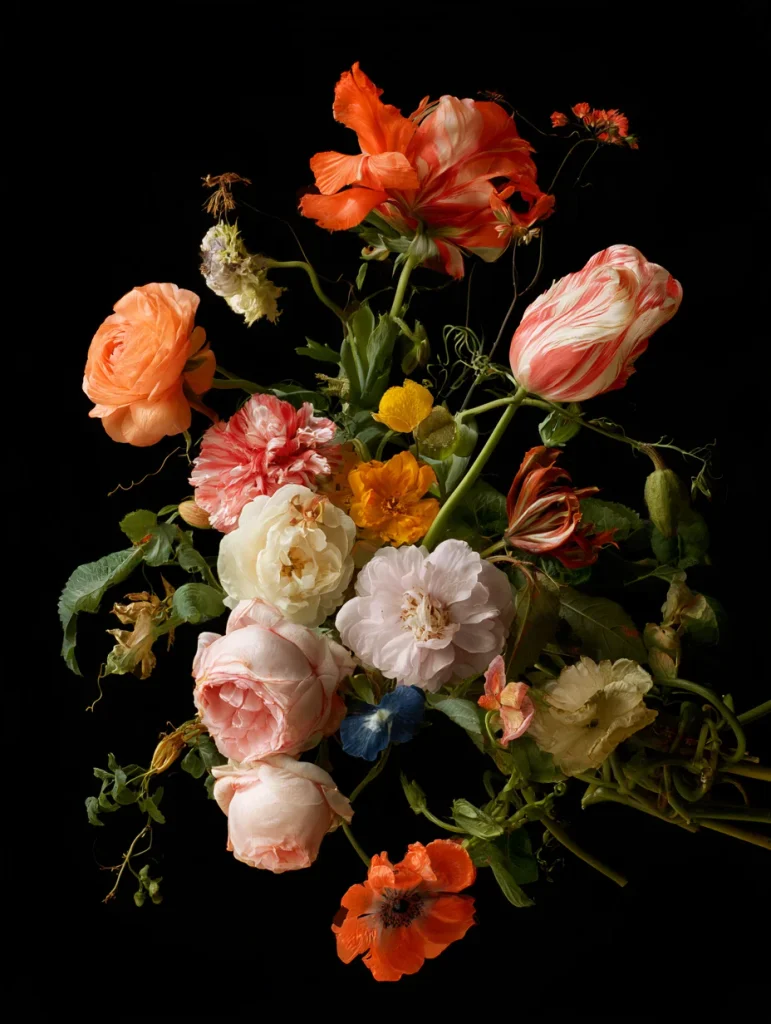
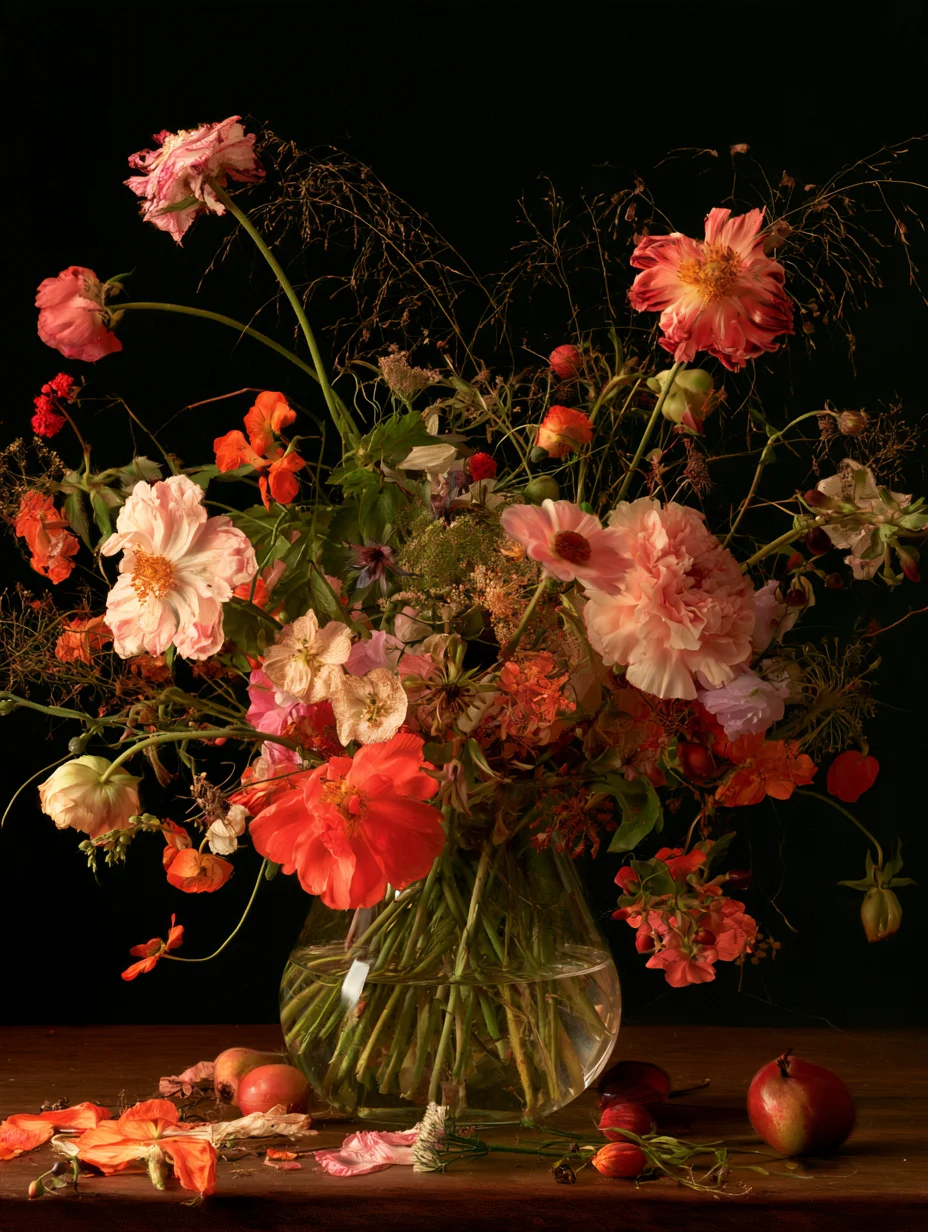
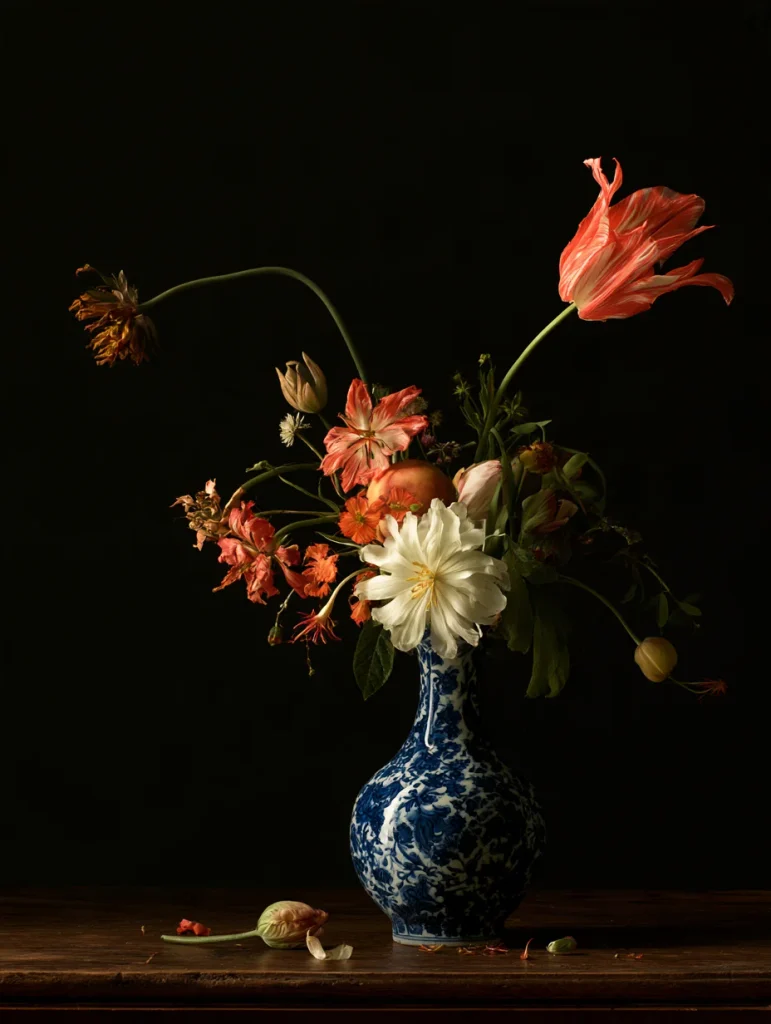
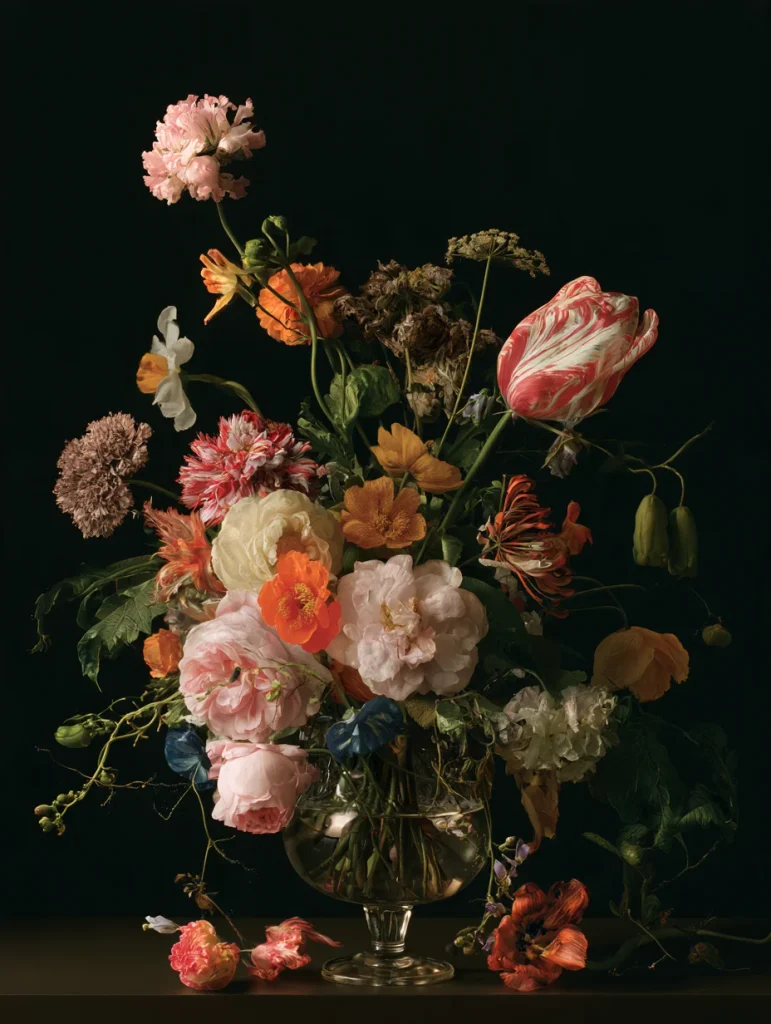
- Translating to Contemporary Design: Begin with layered height rather than a uniformly rounded silhouette. Allow one or two stems to rise beyond the main mass, then place lower blooms or textural accents along a deliberate visual pathway. Varying stages of bloom suggest time and change, while controlled imperfections prevent the design from becoming overly polished.
- Dutch vs. Flemish Influence: A Dutch-inspired arrangement may emphasize close observation, tonal balance, and a carefully edited collection of flowers. Flemish influence, by contrast, encourages greater abundance, theatrical movement, and a sense of opulence.
- Modern Practical Restraint: Choose seasonal flowers from responsible local sources, avoid invasive species, and substitute readily available varieties for historically depicted plants that are environmentally damaging. The result should feel informed rather than antiquarian, borrowing the tradition’s contrast and storytelling while remaining responsive to contemporary ethics.
3. Tropical Linear Design: Architectural and Graphic
Tropical linear floral design treats flowers and foliage as architectural elements rather than a dense collection of blooms. Its emphasis is on strong silhouettes, elongated stems, directional growth, and the graphic qualities of tropical plants like anthuriums, birds-of-paradise, heliconias, ginger, orchids, and broad foliage.
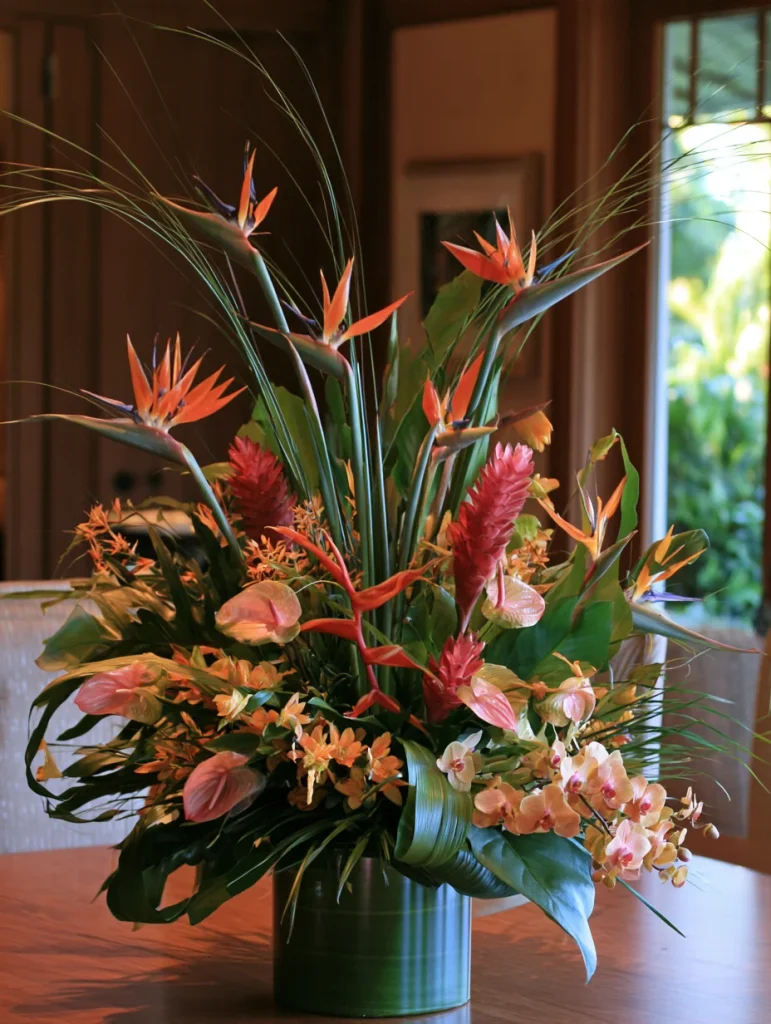
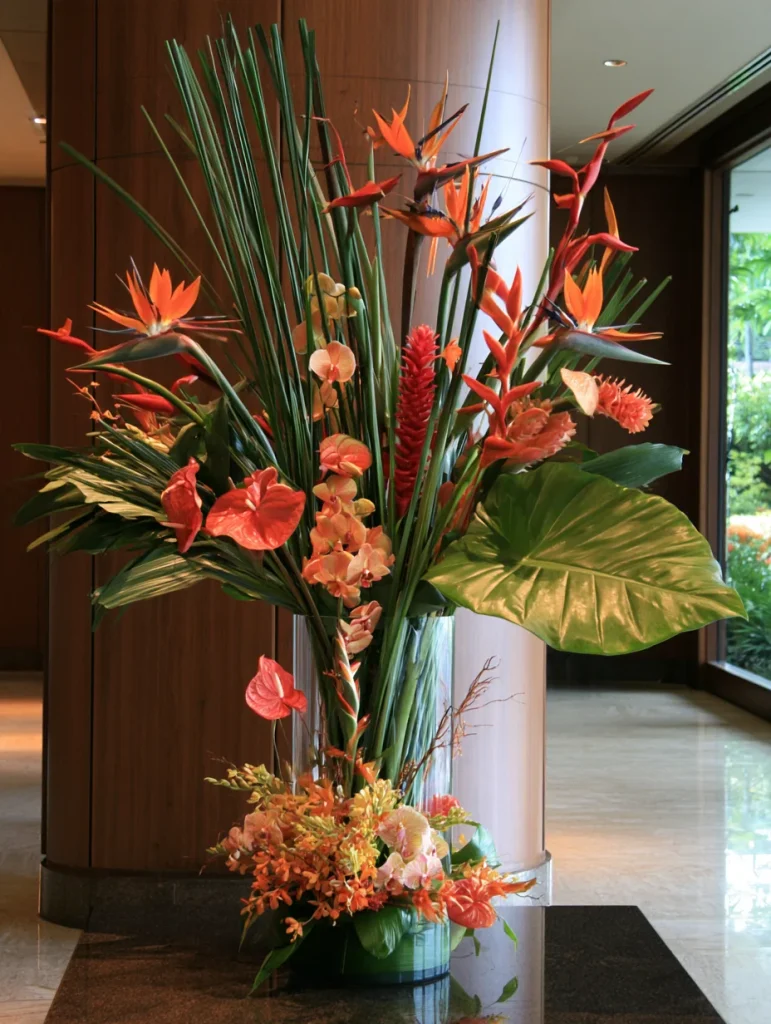
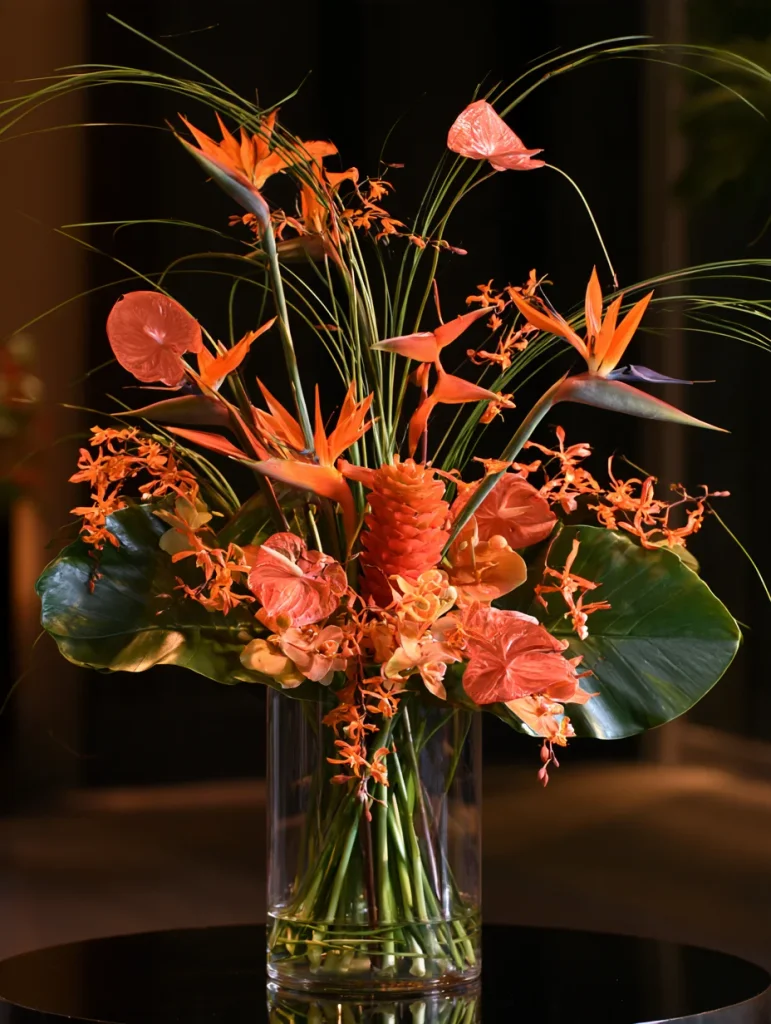
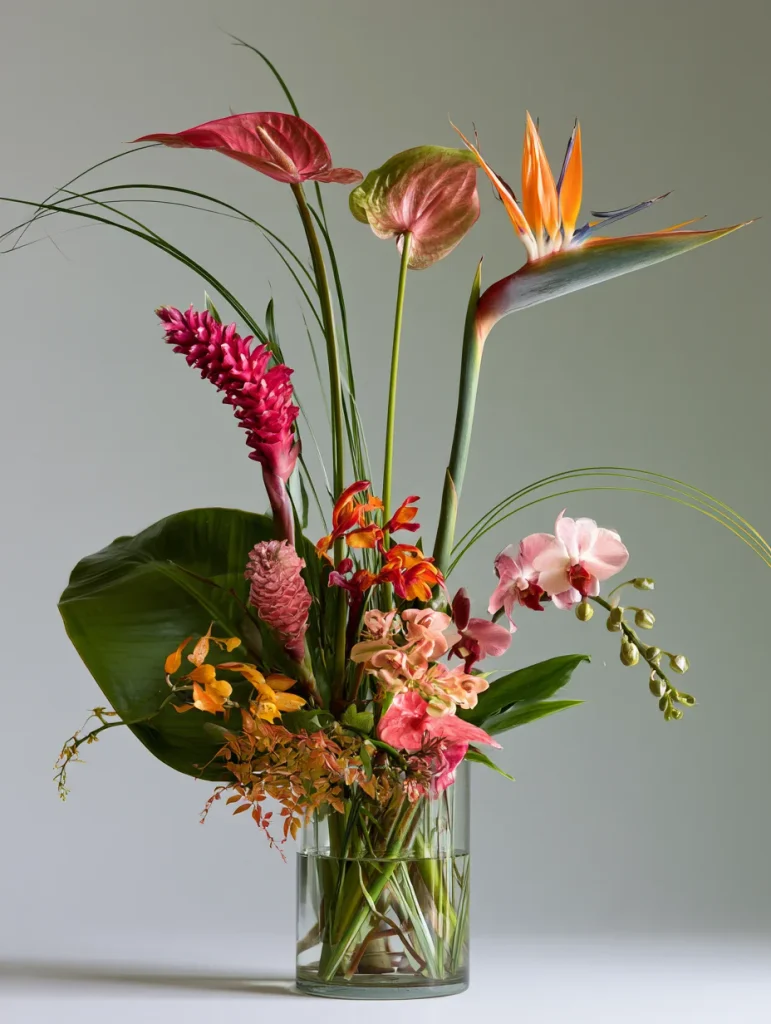
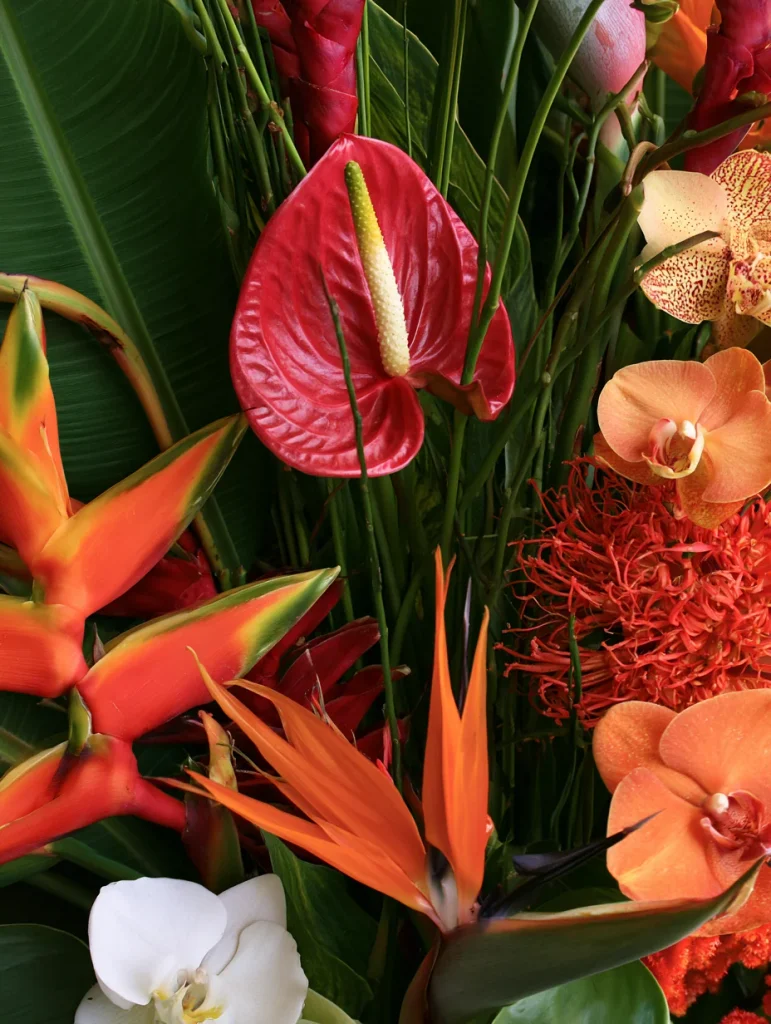
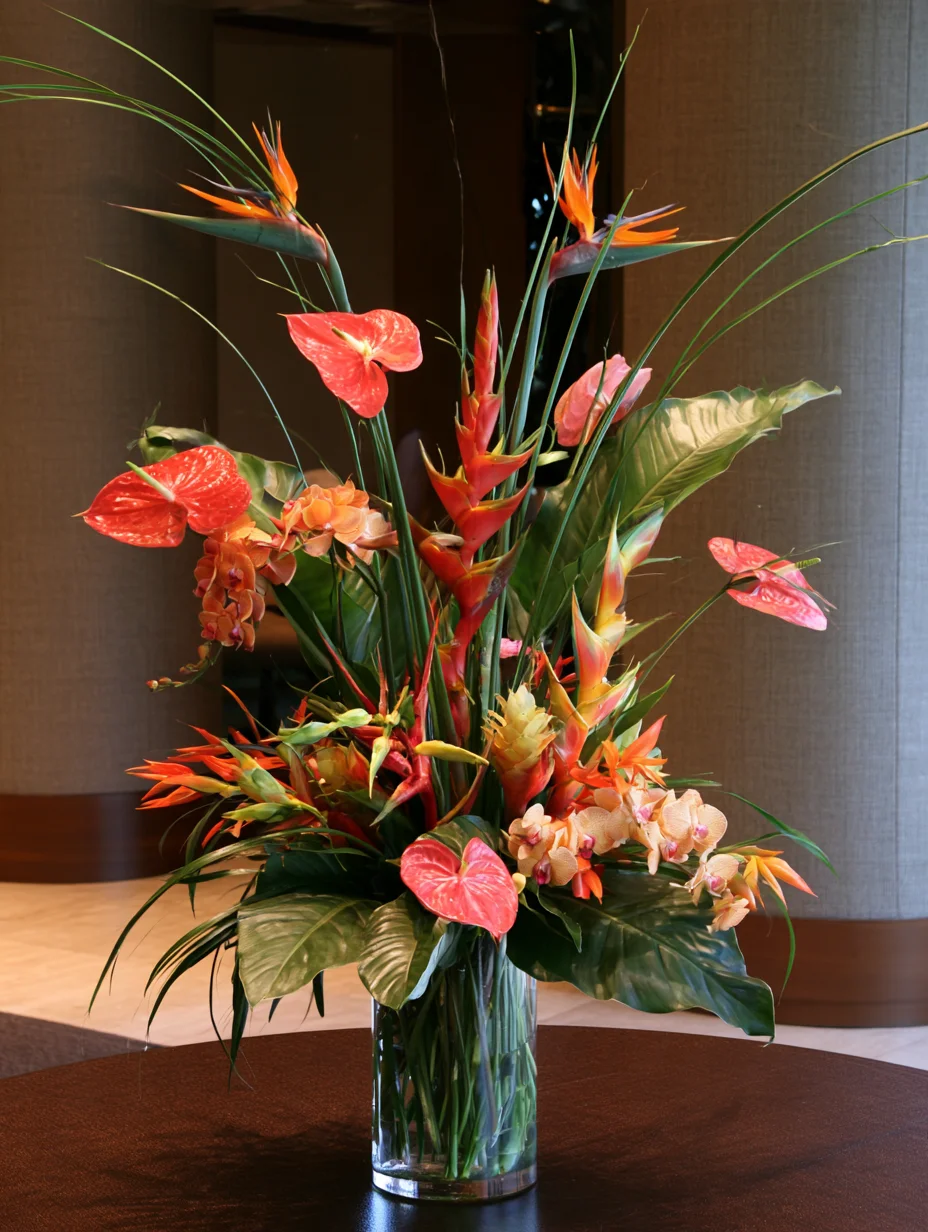
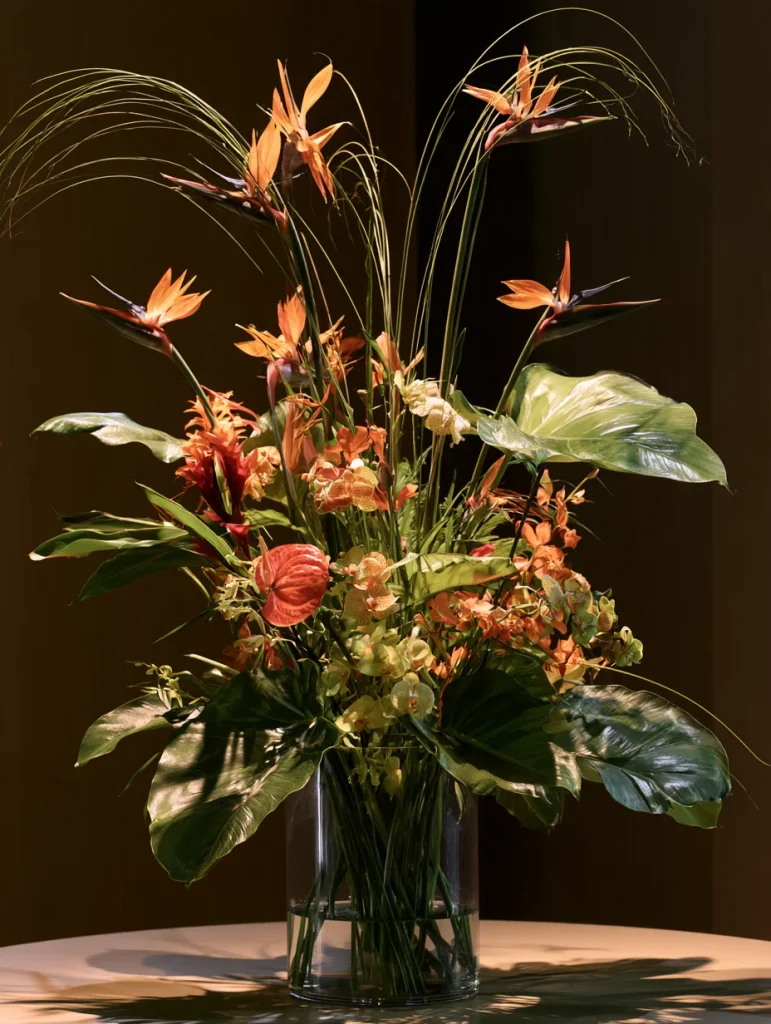
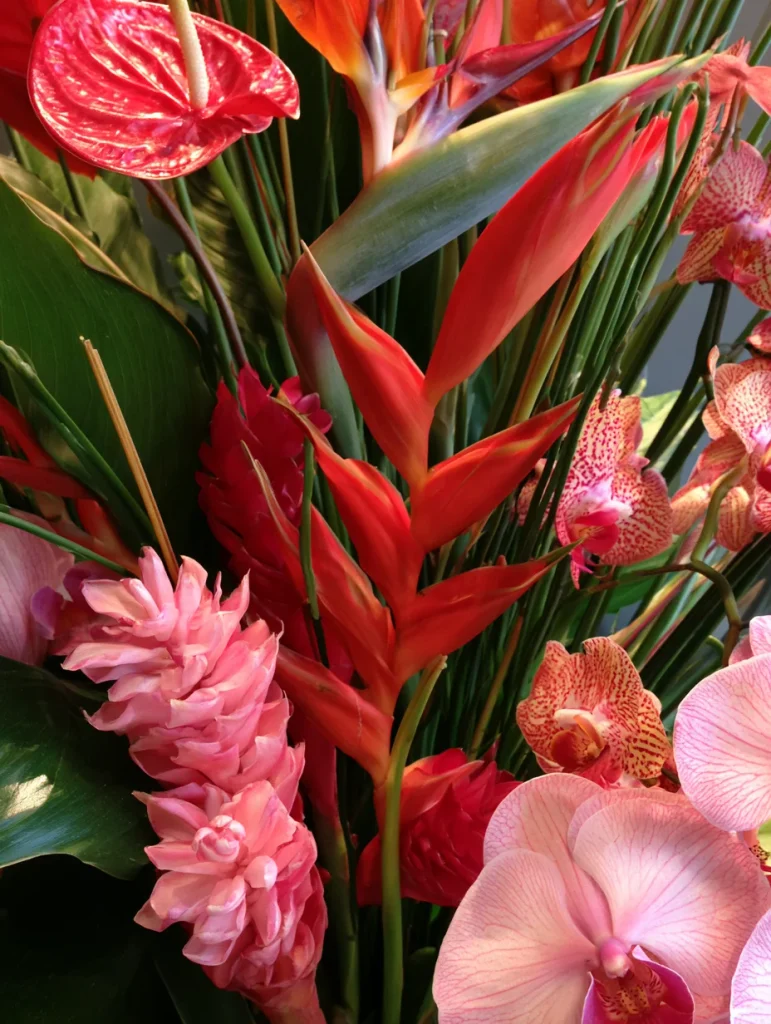
- Composition Principles: Build the composition around line, scale, repetition, contrast, and negative space instead of sheer volume. A single tall stem may establish upward thrust, while a diagonal heliconia or bent leaf introduces movement. Deliberate gaps between materials allow each silhouette to remain legible and prevent visual clutter.
- Conditioning and Structural Support: Recut thick stems under water, remove submerged leaves, and allow woody materials time to hydrate. Leaves may be cut, folded, slit, or gently curved to control their scale and direction. Use floral supports, grids, or internal mechanics for large leaves and heavy blooms, as a stable foundation is critical when the design rises above its vessel.
- Container and Care: Choose a container that reinforces the composition: a tall cylinder supports vertical emphasis, while a low geometric vessel highlights spreading or diagonal forms. In warm conditions, change water frequently, recut stems, remove deteriorating foliage, and keep materials away from direct sun, drafts, and ripening fruit.
4. The Arm Bouquet: Wearable Floral Sculpture
An arm bouquet is a gathered floral design intended to rest against the wearer’s arm, combining the secure gesture of a hand-tied bouquet with a relaxed, elongated silhouette. Its flowers should be durable, reasonably light, and supported by flexible stems that can follow the body without snapping.
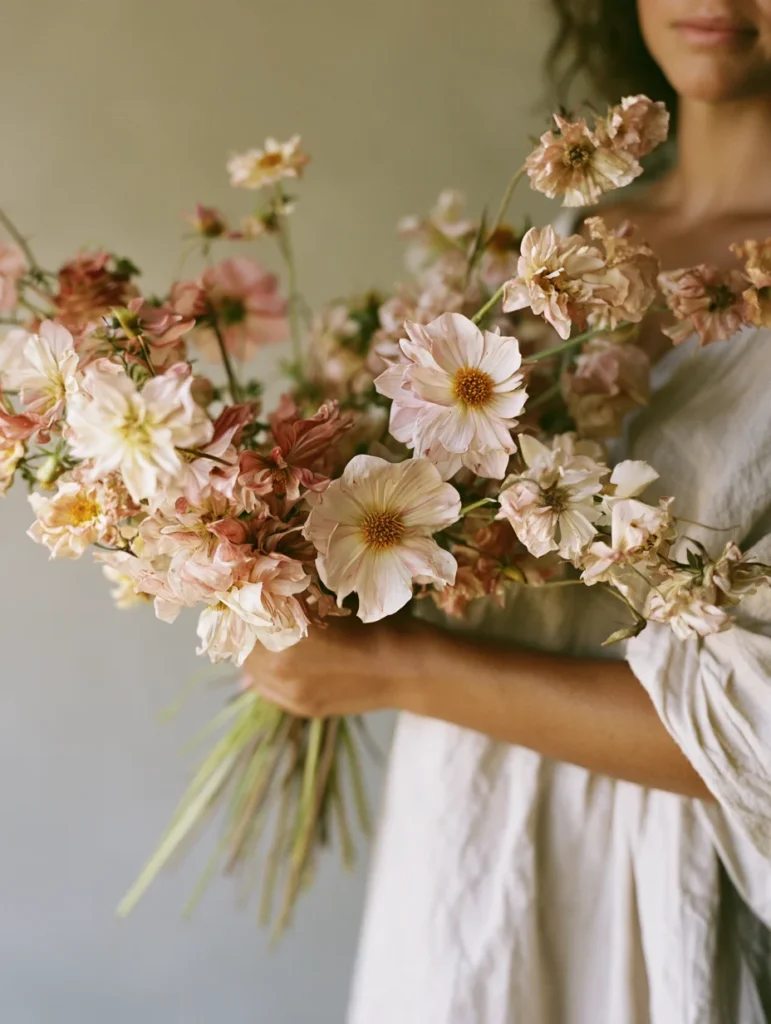
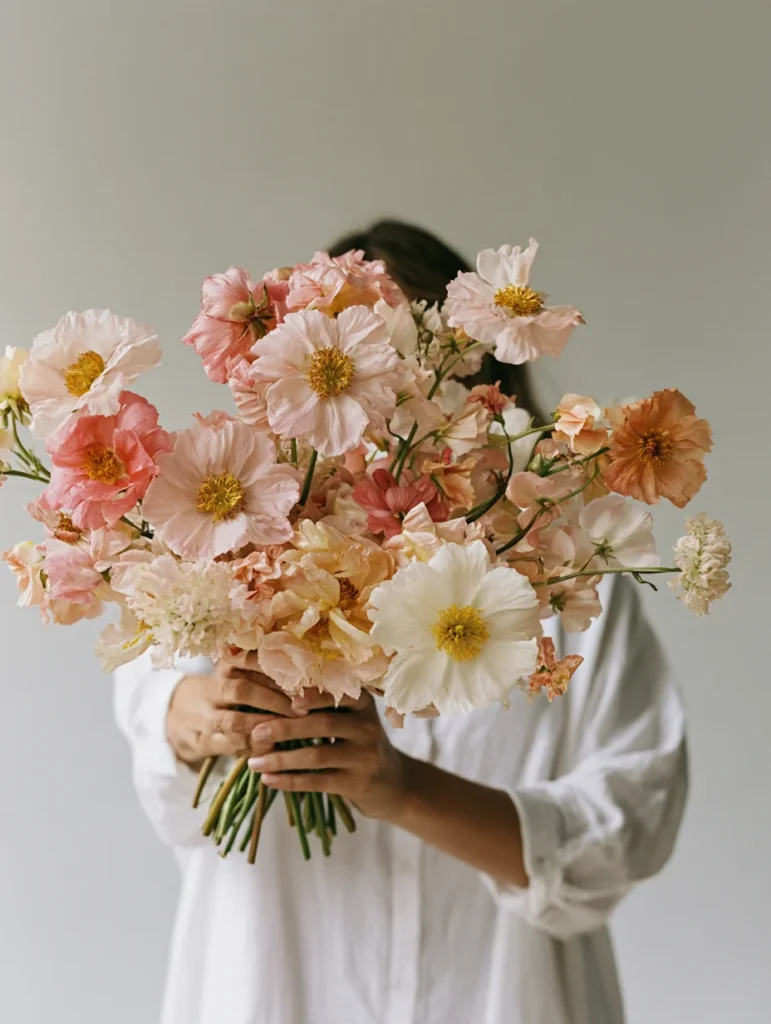
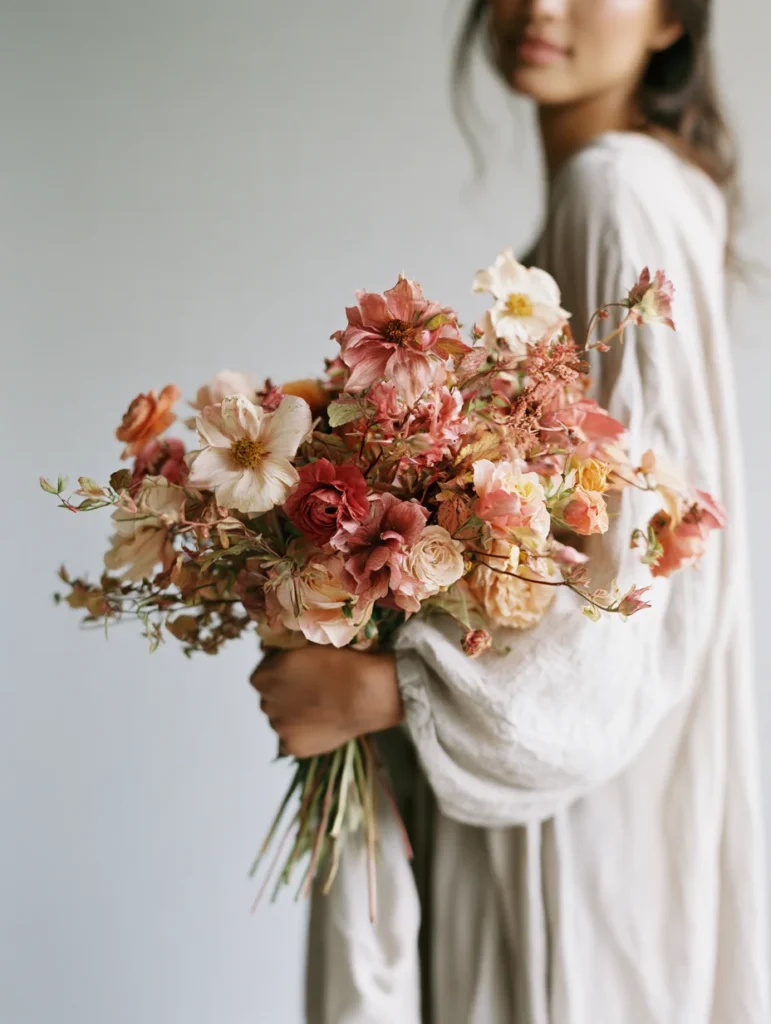
Event and Practical Considerations: For events, carry the stems along the forearm with the flowers angled slightly outward, and keep a water source nearby until departure. Weddings benefit from controlled proportions and durable flowers, while editorial work allows for more dramatic scale. The strongest arm bouquet balances visual drama with comfort, durability, and the natural gesture of the flowers.
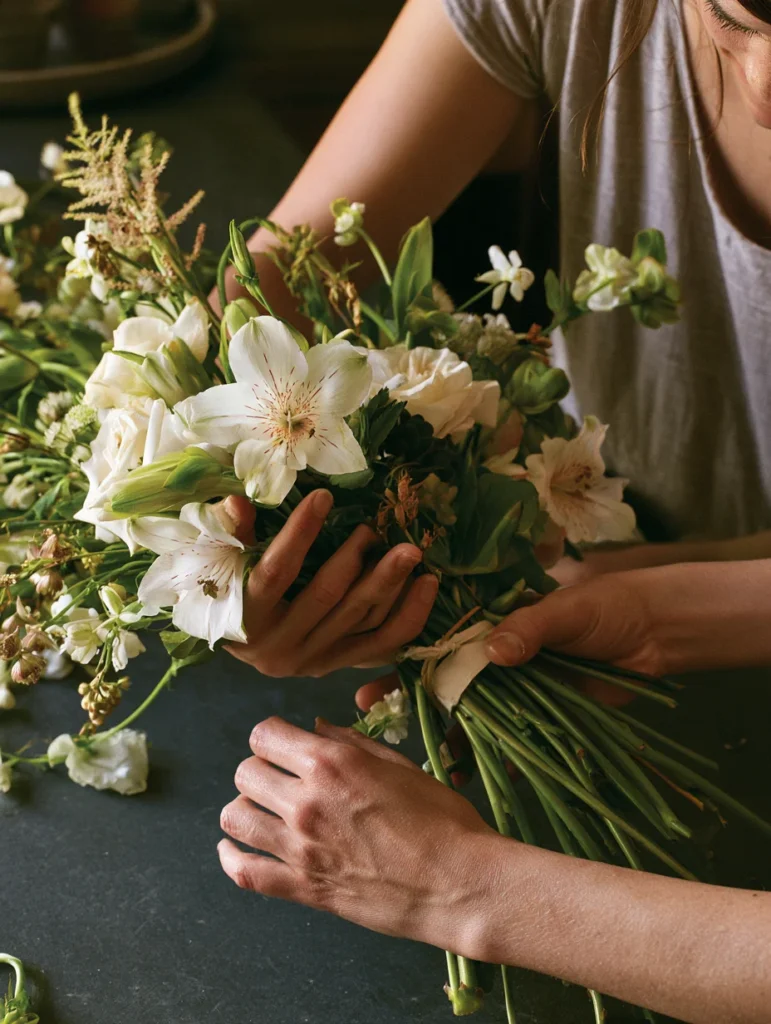
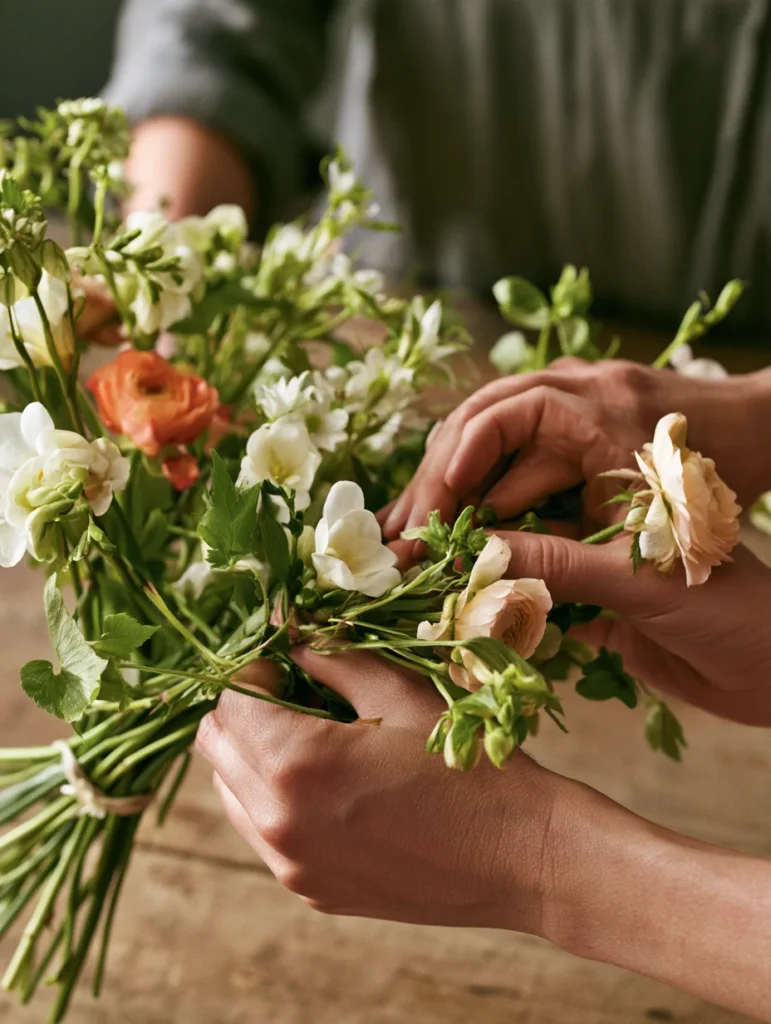
Preparation and Construction: Condition every stem by recutting the bases and hydrating them in clean water. Remove lower leaves and thorns that could catch on clothing. Position focal flowers first to establish visual direction, then add line flowers and foliage to create rhythm and depth. Bind the stems at the point where the arrangement rests comfortably against the forearm, trim the handle evenly, and wrap it with ribbon or fabric for a secure, comfortable grip.
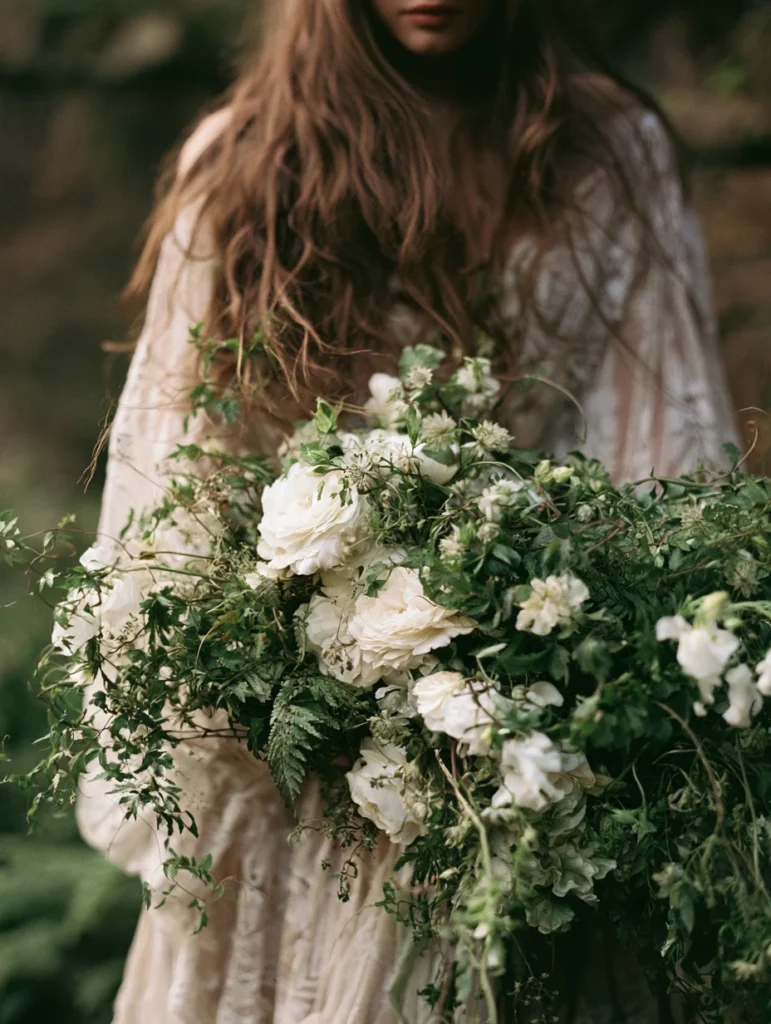
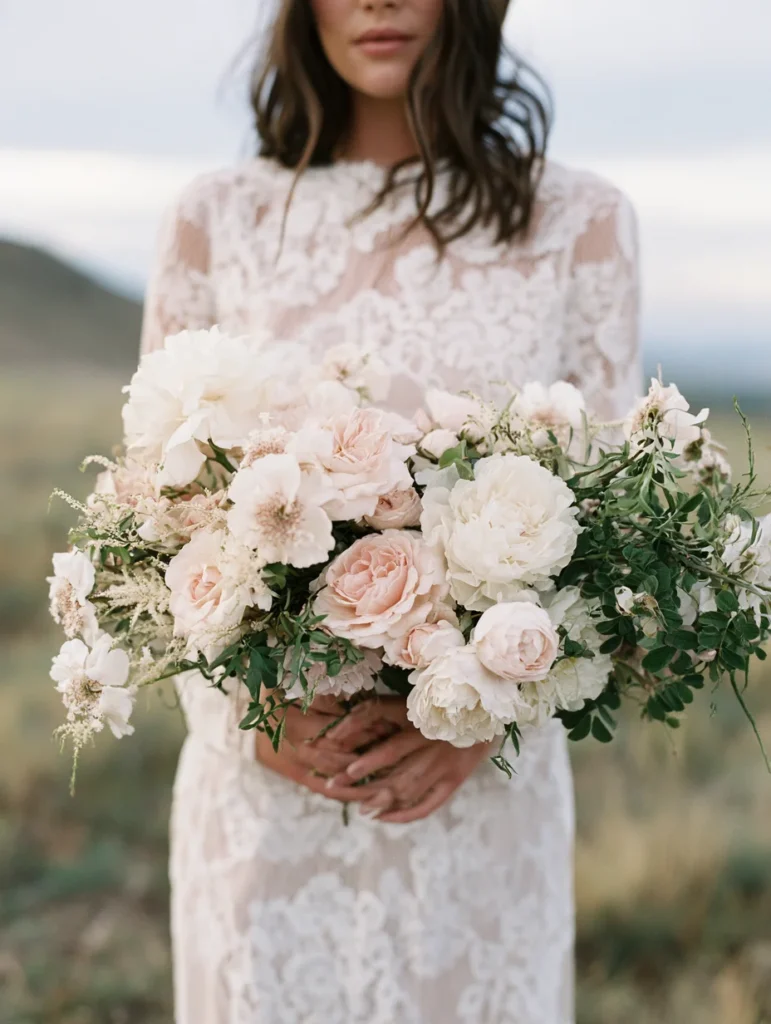
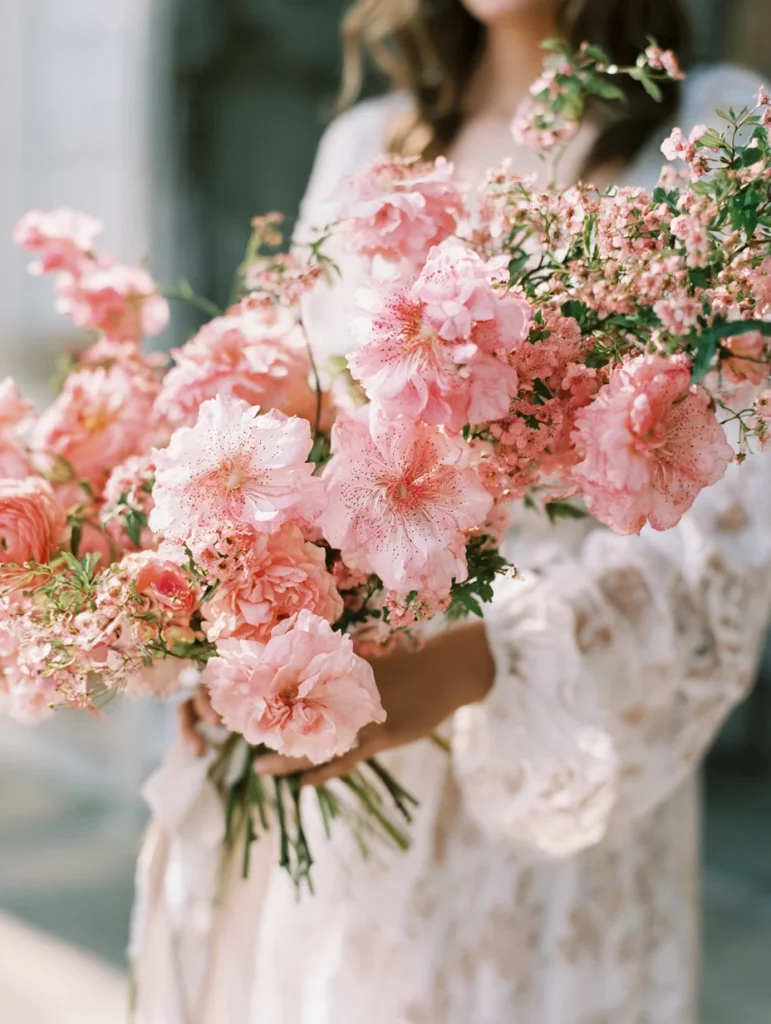
Proportion and Style Variations: Proportion should respond to the person carrying the design. A long, narrow bouquet emphasizes height and movement, while greater width creates a fuller presence in photographs. Styles range from compact and informal to wild, romantic, or highly sculptural versions that utilize unusual angles and negative space.
