
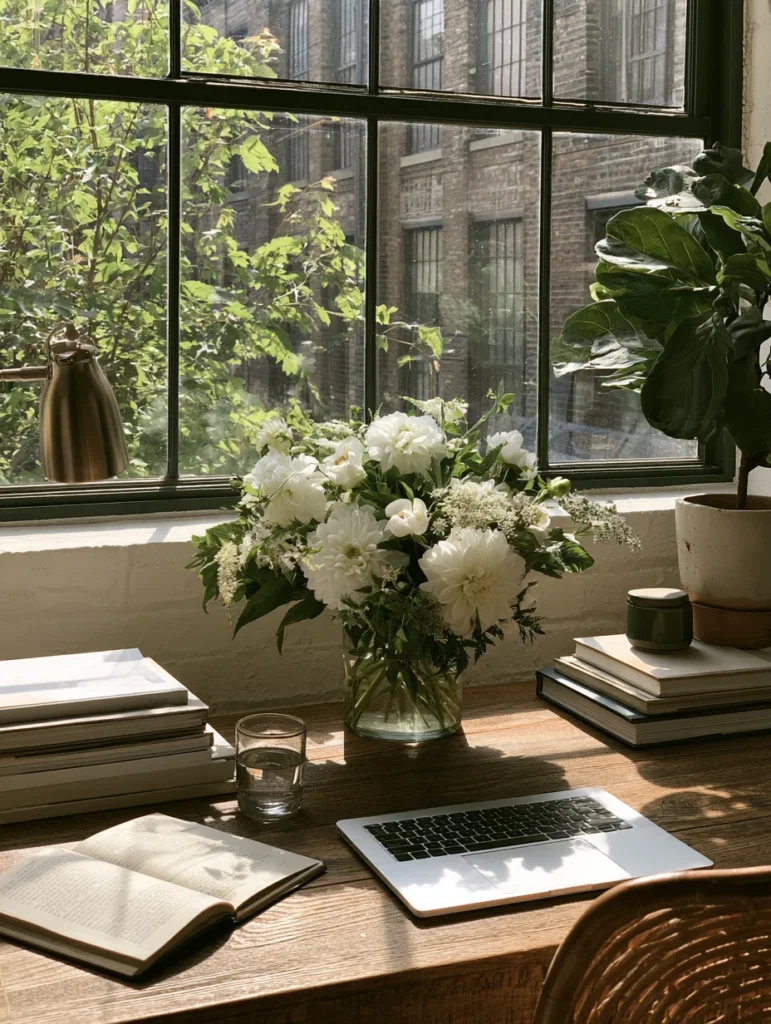
Research suggests that workers exposed to natural elements may complete tasks more efficiently while experiencing lower levels of stress. This reflects a broader approach known as biophilic design: the practice of bringing nature, natural patterns, organic materials, daylight, and living elements into built environments.
Rather than treating nature as a separate destination, biophilic design incorporates its visual and sensory qualities into the places where people spend their time, including everyday workspaces.


The Role of the Desk Bouquet
The concept of biophilic design is not limited to spacious corporate offices with landscaped courtyards. It can easily shape a home workstation, a shared cubicle, or a compact desk in a small room.
A simple bouquet offers one of the most accessible ways to create this connection. Its flowers, stems, foliage, color variation, and natural irregularity provide a direct visual reminder of the outdoors during a screen-focused workday.
When positioned carefully, a bouquet is more than a decorative luxury. It becomes a functional design choice that:
- Supports a desk environment that feels calmer and more inviting.
- Promotes focus and improves visual comfort.
- Softens the sense of confinement that accompanies long hours indoors.
- Remains practical by leaving room for essential equipment and avoiding clutter.
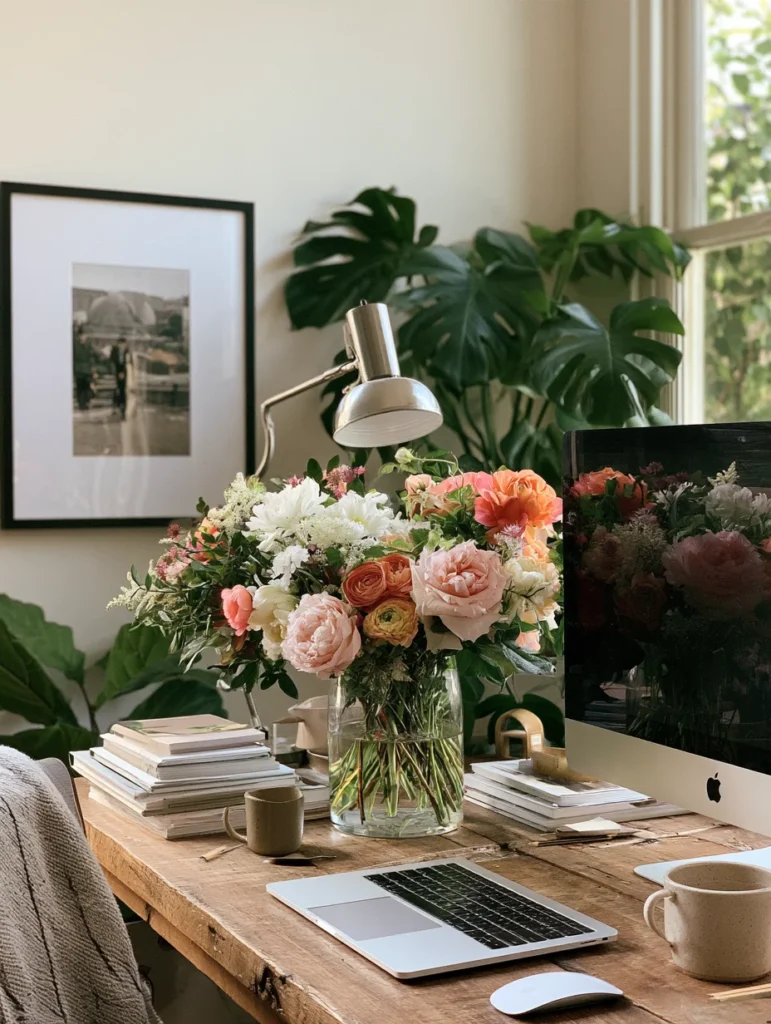

Practical Elements for a Biophilic Workspace
Broad connections to nature can be translated into a few deliberate desk choices.
- Living Elements: A small living plant adds texture, while fresh flowers provide color and seasonal detail. Dried botanicals or a single seasonal branch offer a lower-maintenance alternative.
- Natural Materials: Choose accessories like a wooden tray, stone paperweight, cork mat, bamboo organizer, or a container made from woven fibers.
- Nature-Associated Colors: Reinforce the effect through a notebook, lamp shade, chair cushion, or wall accent using leafy greens, muted blues, earth tones, and warm neutrals.
- Light and Air: Position the desk near a window when possible to utilize daylight and outdoor views for visual relief. Good ventilation also makes a workspace feel fresher. If direct access to nature is limited, a high-quality image of a landscape or botanical subject can provide a modest visual connection.

Strategic Placement and Practical Considerations
To ensure the arrangement supports concentration rather than competing for attention, follow these placement and safety guidelines:
- Peripheral Vision: In a small office or cubicle, place a compact bouquet within peripheral vision, rather than directly in front of the monitor.
- Clearance: Keep stems and leaves clear of task lighting, screens, and frequently used tools. A narrow vase or slim planter preserves valuable desk space.
- Shared Spaces: In shared offices, ensure the arrangement complies with workplace policies regarding fragrance and watering.
- Allergies and Sensitivities: People with allergies may prefer unscented flowers, foliage, dried materials, or realistic artificial plants.
- Safety First: Pet owners must verify that chosen species are non-toxic. Use spill-resistant containers with stable bases to reduce risks near electronics.
What the Research Actually Says
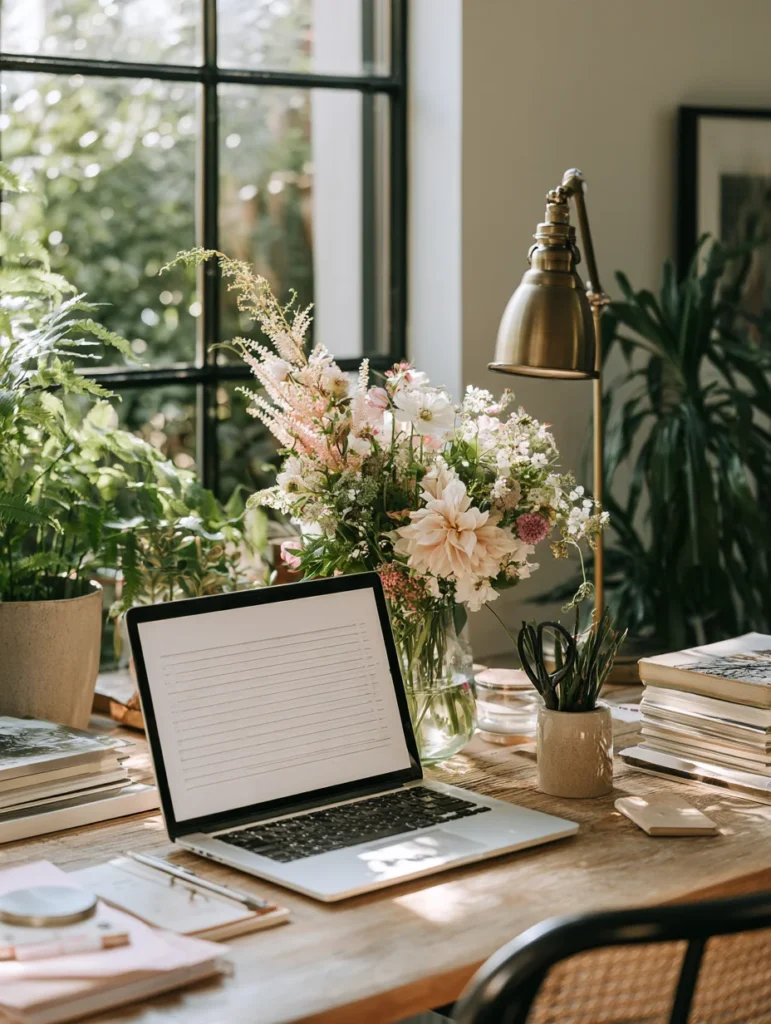
Research on biophilic design suggests that plants, daylight, and natural views can positively influence how people experience a workplace. Studies have linked greenery with improved mood, lower perceived stress, better recovery from attentional fatigue, and stronger engagement with tasks.
However, these findings require careful interpretation:
- The “20% Improvement” Claim: A frequently cited claim is that natural elements improve memory and attention performance by roughly 20 percent. This figure should not be treated as a universal outcome. Results depend heavily on study design, participant groups, length of exposure, and baseline stress levels.
- Mechanisms of Benefit: A plant or bouquet offers a brief, restorative visual break, giving directed attention an opportunity to recover. Natural forms and colors also soften the sterile character of an office, prompting positive emotional responses.
- Holistic Approach: The practical value of a floral arrangement is best considered alongside adequate lighting, ergonomic positioning, regular breaks, sufficient sleep, and manageable workloads. It is a supportive tool, not a guaranteed productivity treatment.


Setting Up a Recurring Desk Bouquet
A recurring flower delivery can make a workspace feel welcoming without requiring a major layout change.
- Size Matters: Look for services offering compact arrangements specifically suited for desks. Request short, compact stems to avoid obstructing monitors or crowding keyboards.
- Vase Selection: Choose a sturdy, spill-resistant vase with a broad base to prevent accidental tipping.
- Delivery Frequency: Weekly or biweekly delivery provides a dependable refresh. Opt for flexible services that allow skipping or pausing during holidays or travel.
- Flower Choice: Seasonal flowers add variety, but sturdy varieties with a longer vase life are especially practical for remaining attractive between deliveries. Consider recyclable packaging for a lower-waste routine.
Essential Care and Low-Maintenance Alternatives
Basic care keeps desk flowers fresh and reduces maintenance time:
- Place flowers in a clean container filled with fresh water.
- Trim the stems at an angle before arranging them.
- Remove any leaves that would sit below the waterline to prevent bacterial growth.
- Refresh the water regularly, rinsing the vase as needed.
- Keep flowers away from direct heat, radiators, air-conditioning vents, and strong sunlight.
- Remove fading stems promptly so they do not affect the remaining blooms.
For those who travel frequently or prefer minimal upkeep, consider hardy potted plants, dried flowers, preserved arrangements, or high-quality faux stems. These alternatives provide natural texture and visual interest with significantly fewer maintenance demands.
A Simple Starting Point
To begin, try introducing one modest bouquet for a month. Position it safely within the desk’s natural sightline without crowding essential work materials.
Observe any changes in your mood, calmness, and concentration over this period. Then, adjust the arrangement’s size, delivery frequency, or type of natural element according to your personal response. This tailored approach ensures the biophilic design genuinely serves your specific work environment.
