
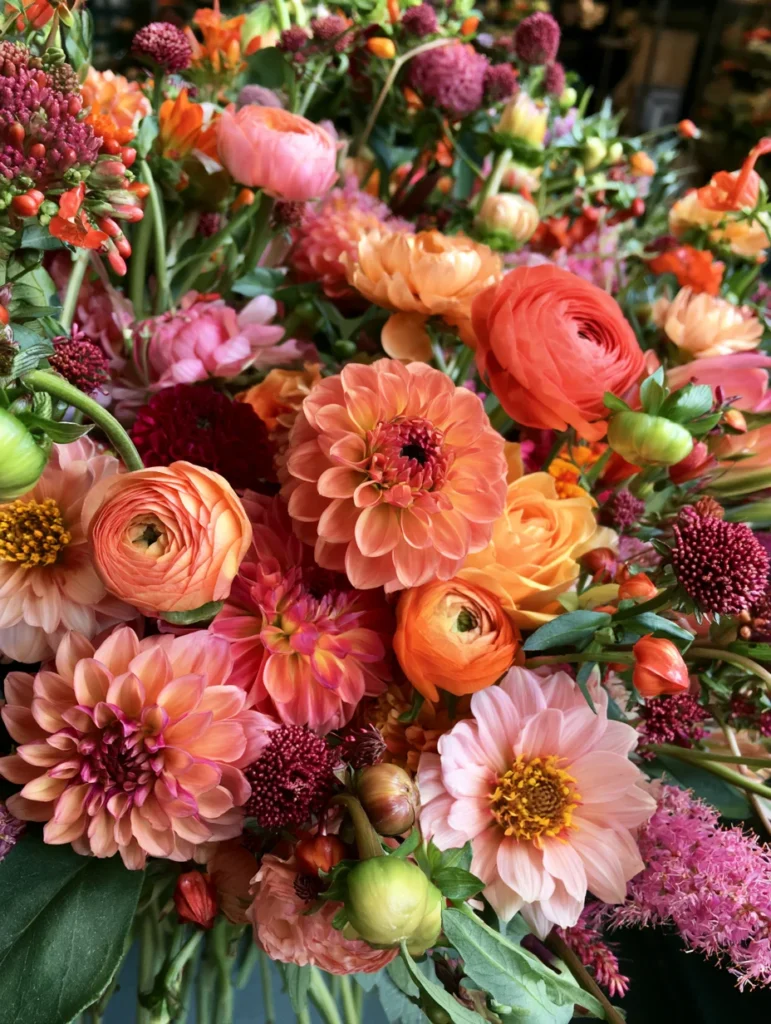
Arranging flowers in a vase offers a simple, everyday introduction to color therapy. As stems are grouped, separated, and placed in different parts of a room, their hues can alter the visual character of the space. Color attracts attention, creates associations, and contributes to a sense of energy or calm before a person has consciously identified why the arrangement feels appealing. A bouquet of scarlet, orange, and yellow blooms may make a room appear more animated, whereas lavender, blue, white, or soft green can support a quieter visual atmosphere.
However, these responses are not universal or purely biological. Personal memories, cultural symbolism, individual preferences, natural light, texture, fragrance, and the living presence of plants all contribute, making the effect of an arrangement far more complex than color alone.
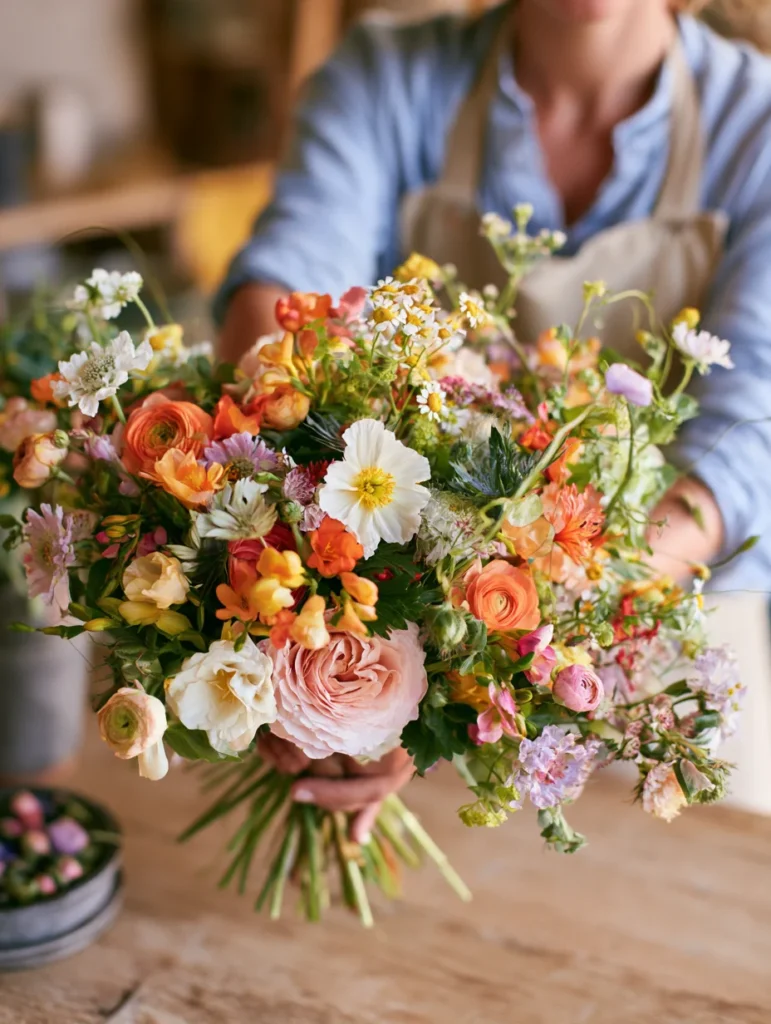
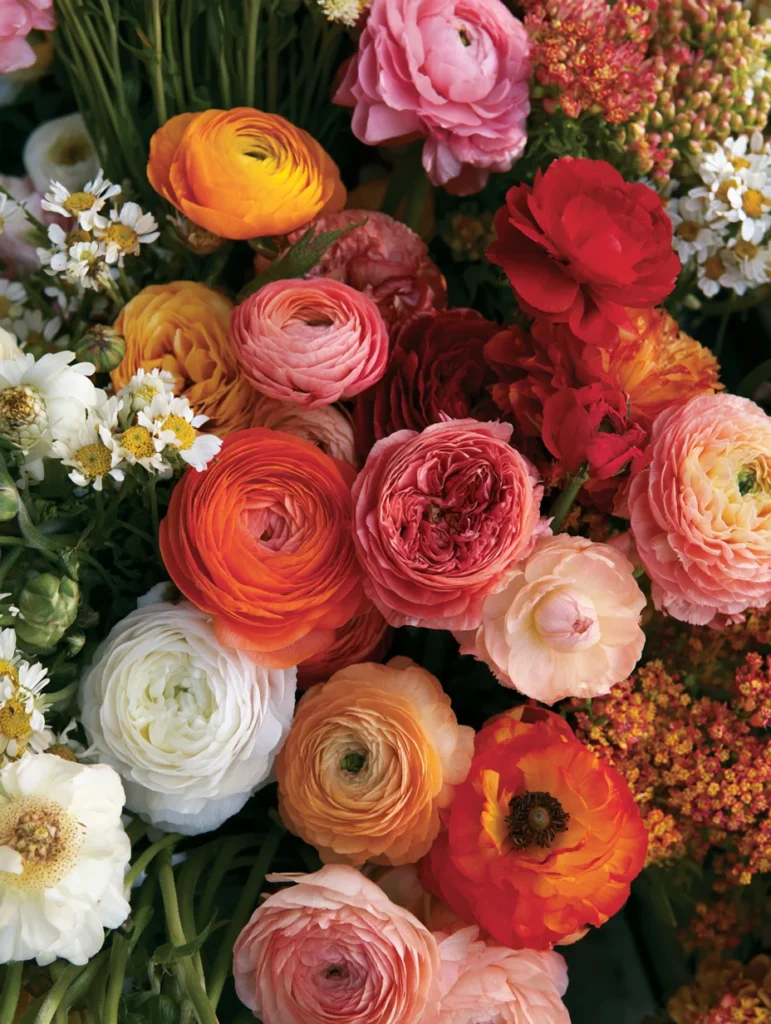
The Reality of Floral Color Psychology
It is useful to describe the benefits of floral color carefully. While flowers can significantly impact a space, their effects should be understood realistically:
- What flowers can do: Looking at an attractive bouquet may encourage positive attention, provide a pleasant interruption to repetitive thoughts, and make an environment feel more cared for. Bright combinations can help a living area feel lively, while muted or cool palettes may suit reading, concentration, or rest.
- What flowers cannot do: Flowers do not reliably or directly produce measurable dopamine or serotonin surges in the way medication or clinical treatments might. Claims that a specific flower color automatically triggers a chemical mood change oversimplify both emotional experience and brain function.
Flower color should be viewed as one element of a pleasant environment. Such choices can complement routines that promote comfort and connection, but they should never replace professional care for persistent anxiety, depression, or seasonal mood difficulties.
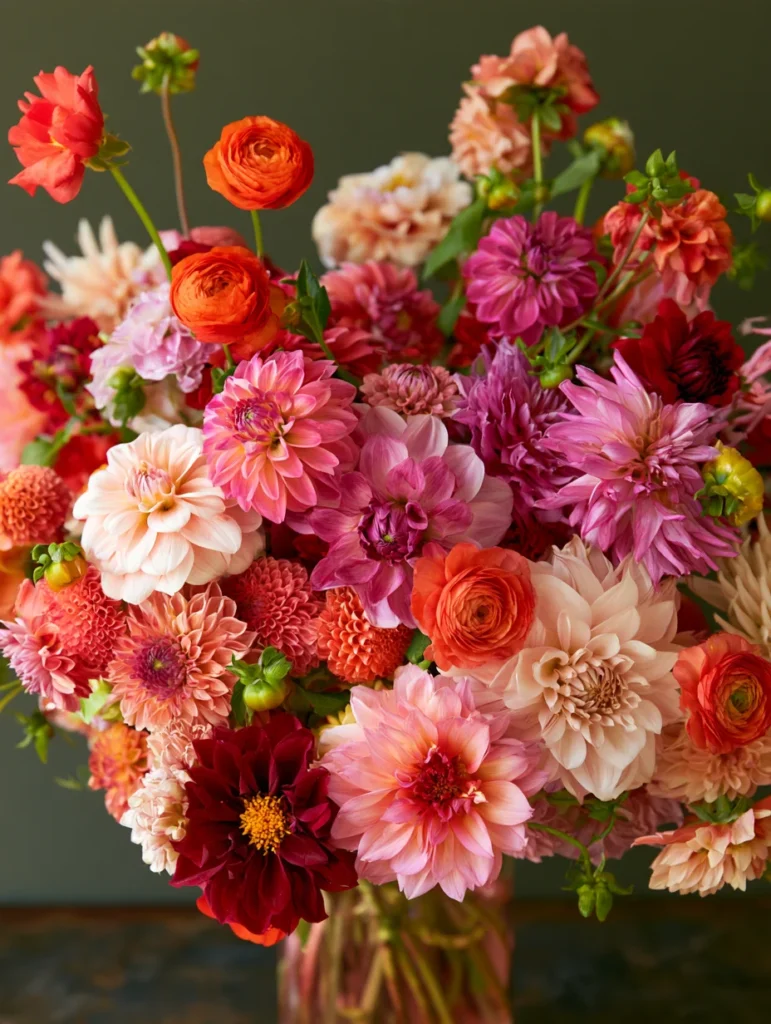
Warm Hues: Yellow and Orange
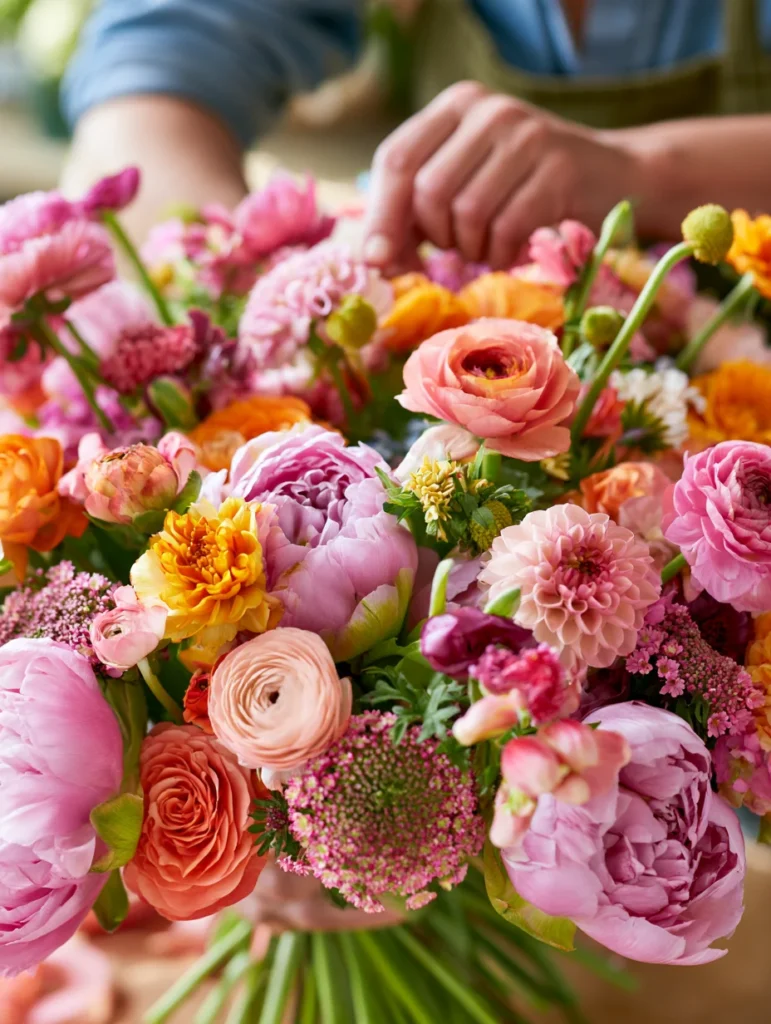
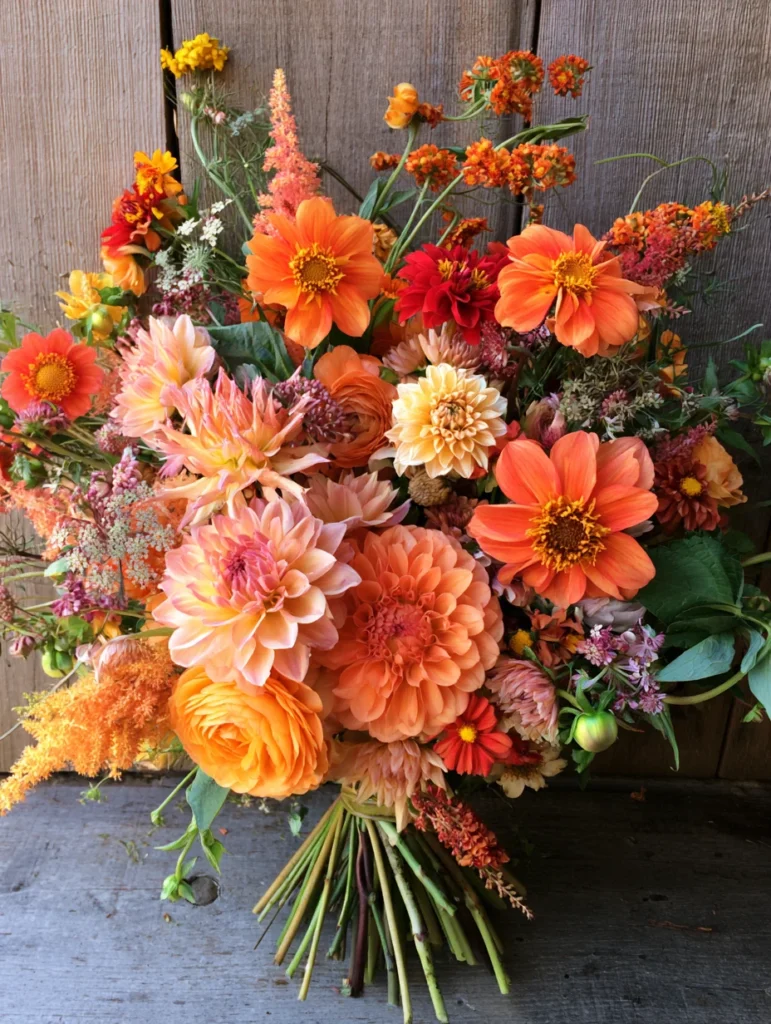
Yellow and orange flowers often bring an immediate sense of sunlight into an interior. Varieties like sunflowers, daffodils, marigolds, orange tulips, and ranunculus share a warm visual character.
- Emotional Cues: These golden and amber tones are commonly associated with warmth, enthusiasm, movement, and optimism. They are highly useful in dark winter rooms, morning spaces, work areas, or celebratory settings where a design needs to feel welcoming and active.
- Practical Arrangement: Combine golden flowers with fresh green foliage (such as eucalyptus, ruscus, or olive branches) to provide contrast and prevent the palette from appearing overly intense. Use varied heights to create an energetic composition, and consider an asymmetrical design for a lively feel.
- Important Caveats: These colors are environmental and emotional cues, not medical treatments. A bright bouquet cannot cure seasonal affective disorder. Furthermore, personal preferences and memories can make these hues feel comforting to one person and overstimulating to another. Designers should always observe the recipient’s tastes and adjust saturation and quantity accordingly.
Cool Tones: Blue, Purple, and Lavender
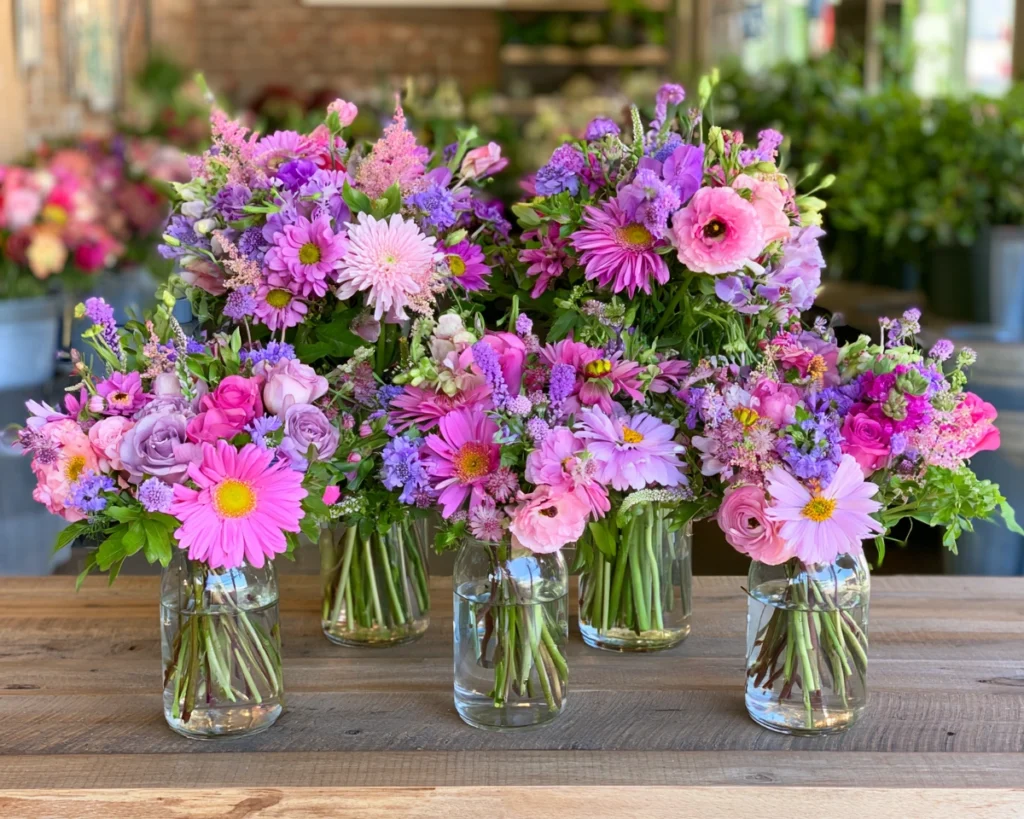
Cool-toned flowers and foliage can give a bouquet a composed, spacious character. Blue hydrangeas, delphiniums, iris, lavender, and violet flowers often read as restful, reflective, or sophisticated, while blue-gray eucalyptus introduces a muted, silvery contrast.
- Design Possibilities: In a room filled with strong patterns or visual activity, these shades may soften the overall impression. Pale blue suggests openness and airiness, particularly when combined with white flowers or light containers, making it ideal for bedrooms and reading corners. Deeper purple tones create richness and visual depth, feeling elegant when balanced with generous greenery.
- The Fragrance Factor: Lavender may also contribute through its scent. Some people associate its aroma with relaxation, but this sensory response should be distinguished from the psychological effect of its color. A person may find pale violet visually soothing while responding neutrally to the fragrance, or vice versa.
- Testing the Space: Cool colors are not universally calming. Blue or purple may appear distant, somber, or overly formal to some viewers, especially in dim rooms. Bouquets should always be tested in the actual space where they will remain, observing how they look in both daylight and artificial light.
Social and Energetic Hues: Pink and Red
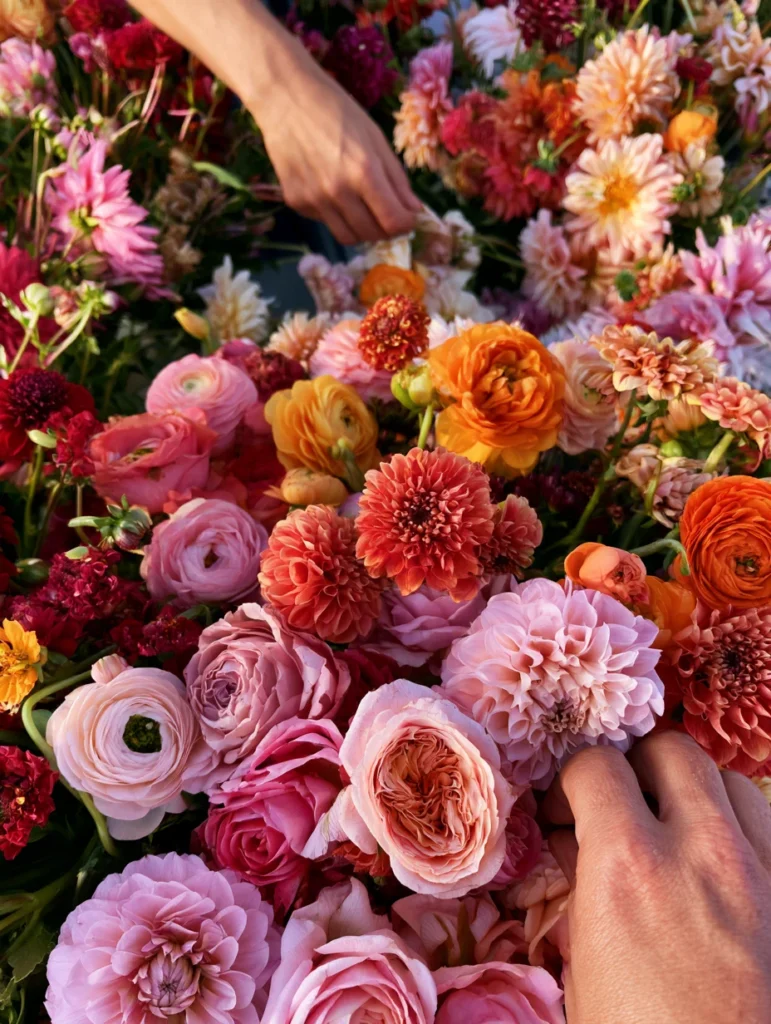
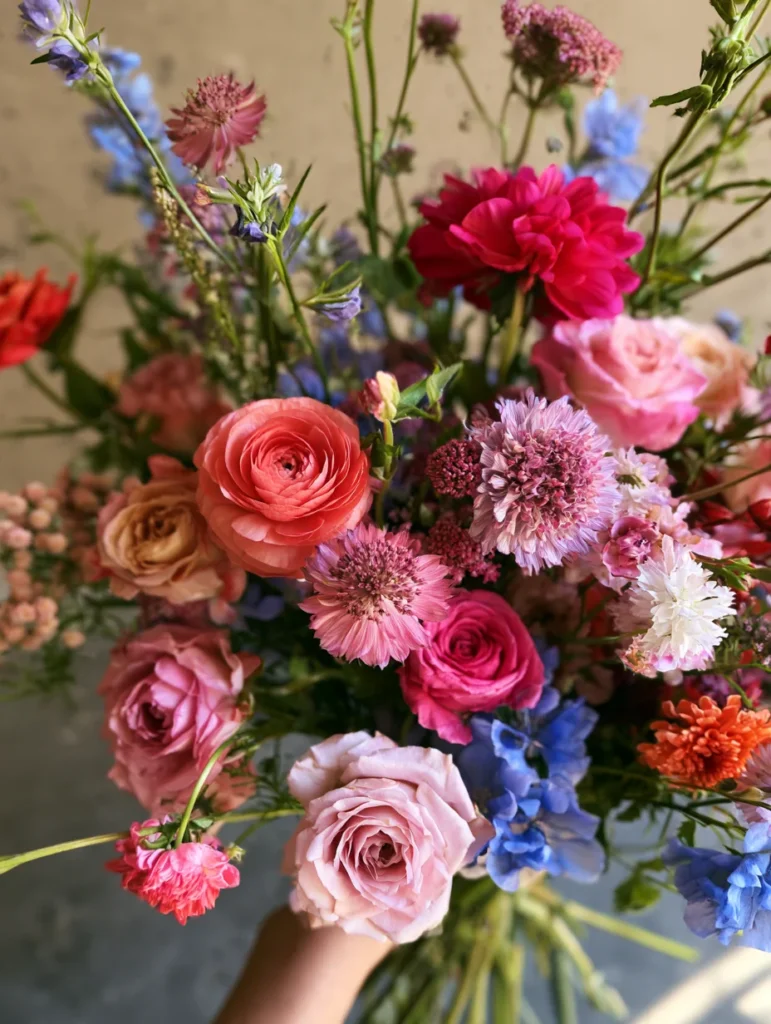
Pink and red flowers can give a room an immediately warmer, more social character. Roses, peonies, carnations, gerbera daisies, tulips, and camellias offer varied forms while sharing an ability to communicate feeling through color.
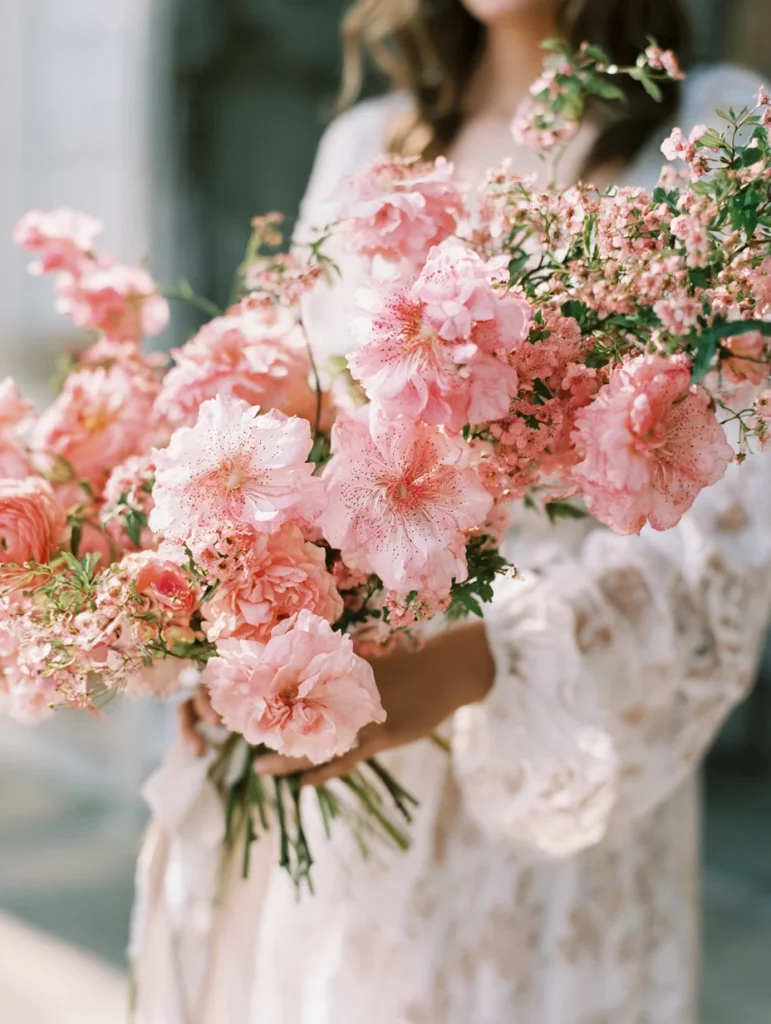
- The Softness of Pink: Pink commonly suggests tenderness, comfort, affection, and approachability. Its softer visual presence can make a setting feel considerate and intimate, making it suitable for gifts, bedrooms, shared living spaces, or dining tables intended for relaxed conversation.
- The Energy of Red: Red generally attracts attention more quickly. It is associated with vitality, passion, confidence, and excitement, bringing energy to an entryway, dinner gathering, or celebratory arrangement. Saturated scarlet or magenta blooms introduce drama and stimulation, whereas blush or dusty rose flowers create a soothing, gentle atmosphere.
- Balancing Proportion: In a shared living or dining area, warm-colored flowers may encourage people to linger and converse. However, a large mass of intense red can become visually overwhelming, particularly in a small room. Balance saturated blooms with cream flowers, leafy green foliage, or pale pink accents to provide visual space while preserving warmth.
A Practical Framework for Selection
When designing a bouquet to influence mood, follow this practical selection method:
- Determine the Desired Mood: Decide whether the arrangement should soothe, welcome, energize, or express affection.
- Assess the Environment: Consider the room’s lighting, function, and existing color palette.
- Prioritize Personal Association: Choose flowers whose meanings feel personally positive to the recipient, rather than relying solely on conventional symbolism.
- Observe and Adjust: Note whether the arrangement genuinely changes the space for the better in both natural and artificial light.
Ultimately, the strongest benefit may come not from hue alone, but from the complete ritual of selecting, arranging, displaying, and caring for flowers. That repeated, mindful attention can create a lasting sense of connection and pleasure in everyday surroundings.
Develop a deeper relationship with yourself — mind, body, and identity. Reconnect with your truth, your boundaries, and your desire.
